Adaptive Technologies Powering Consistent HD Video Delivery Over Fluctuating Networks
Noah Franke · Aug 6, 2026
Adaptive Technologies Powering Consistent HD Video Delivery Over Fluctuating Networks
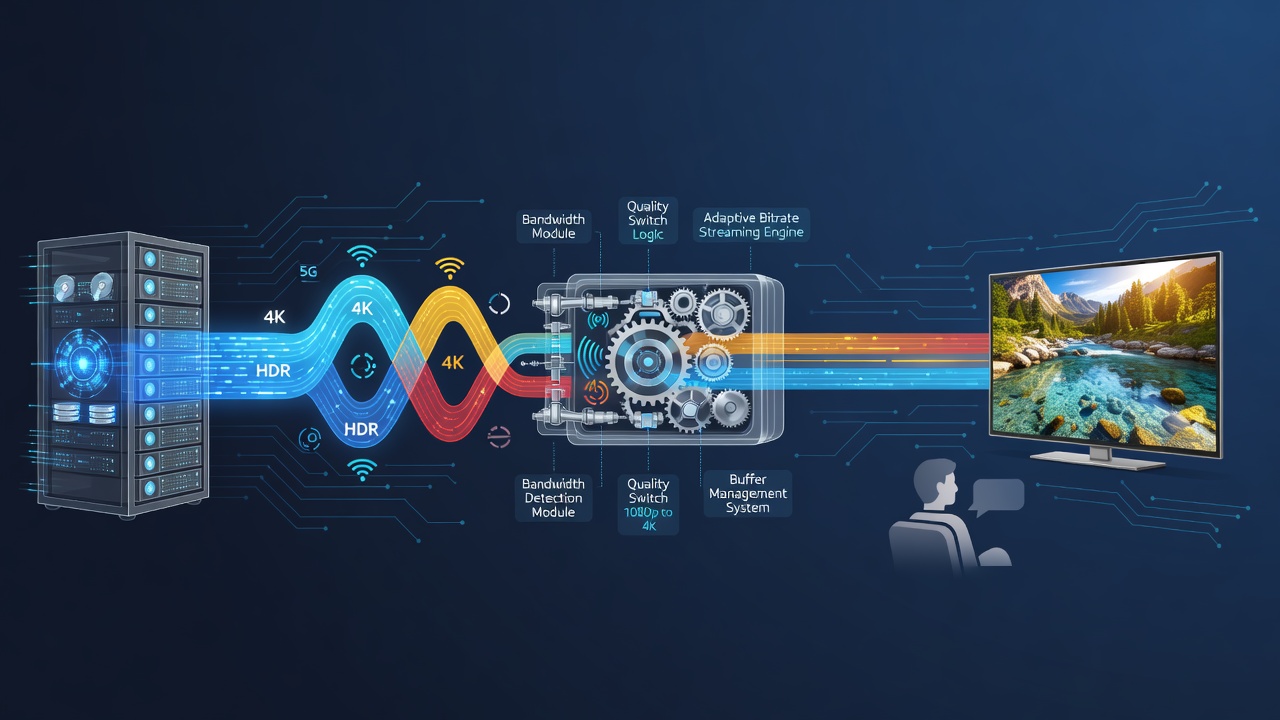
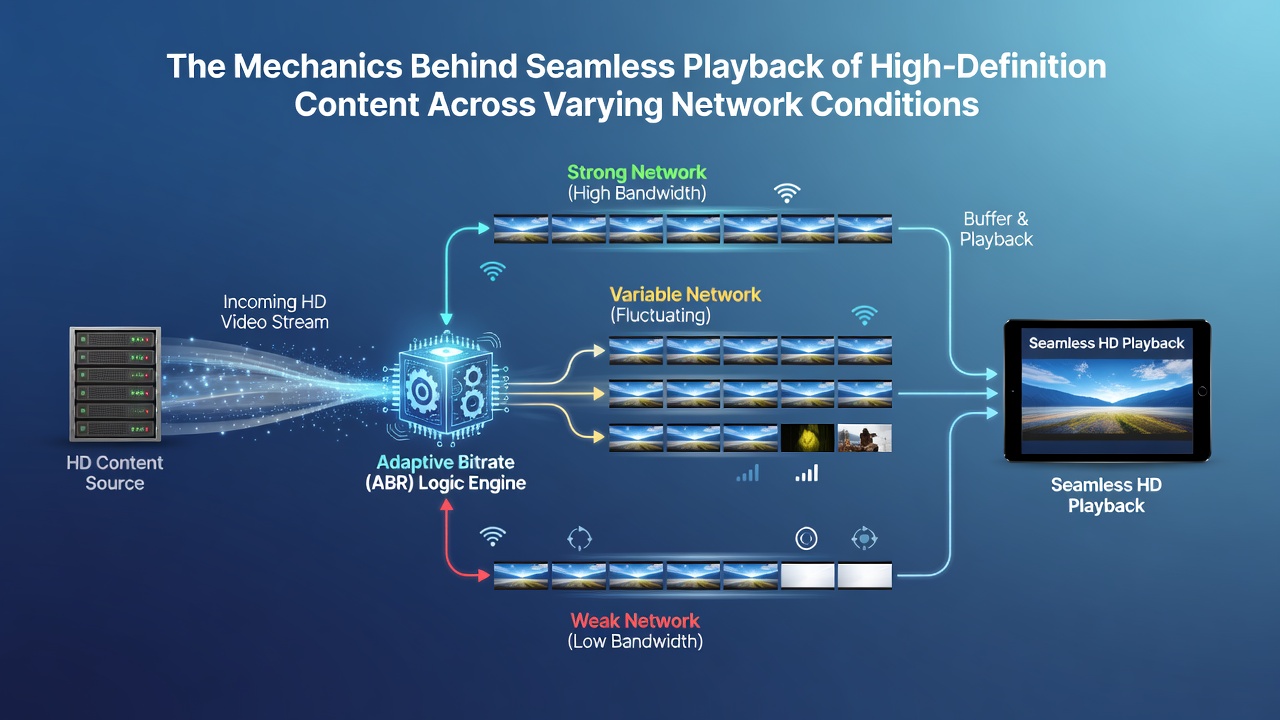
Streaming platforms rely on sophisticated systems that adjust video quality in real time to maintain high-definition playback even when network speeds vary, and researchers have documented these processes in detail across multiple studies conducted through 2026. The core approach involves adaptive bitrate streaming protocols that monitor available bandwidth continuously while selecting from several pre-encoded versions of the same content at different resolutions and bitrates. Engineers at major services implement these protocols to prevent interruptions, and data from industry reports indicate that such adjustments occur multiple times per minute during typical viewing sessions.
Core Protocols Driving Real-Time Adjustments
Two primary standards dominate this space: HTTP Live Streaming (HLS) developed for Apple ecosystems and Dynamic Adaptive Streaming over HTTP (DASH) adopted widely across other platforms. Both break video into short segments, usually lasting two to ten seconds each, and the player software requests the next segment at a quality level that matches current network throughput. Observers note that this segmented approach allows seamless switches between quality tiers without visible glitches because the transition happens at segment boundaries. In August 2026, updated implementations of these protocols incorporate machine learning models trained on vast datasets of user sessions to predict bandwidth changes seconds ahead, reducing the frequency of quality drops according to technical papers presented at recent conferences.
Content Delivery Networks and Edge Caching
Global networks of servers positioned close to end users form another critical layer, and content delivery networks (CDNs) cache popular titles at edge locations so that data travels shorter distances. When congestion arises on one route, the system reroutes requests to alternative nodes, and measurements from network operators show latency reductions of up to 60 percent compared with centralized delivery. Those who manage these infrastructures combine CDN routing with peering agreements between internet service providers to maintain stable throughput, while error correction techniques embedded in the transport layer recover lost packets without triggering full retransmissions that would otherwise cause buffering.
Buffering Strategies and Prefetching Mechanisms
Players maintain a buffer of upcoming segments to smooth over temporary dips in speed, and the size of this buffer adapts dynamically based on detected network stability. Researchers discovered that optimal buffer management balances memory usage against the risk of stalls, and algorithms often reserve extra seconds of content when patterns suggest upcoming variability such as mobile handoffs between cell towers. Prefetching extends this idea by downloading lower-priority elements like subtitles or alternate audio tracks in advance, and tests conducted by academic groups confirm that these techniques cut startup times by several seconds on average.
Codec efficiency plays an equally important role because newer standards such as AV1 and the ongoing refinements to HEVC allow higher quality at lower bitrates, and service providers deploy these codecs selectively depending on device capabilities and available bandwidth. Figures from codec adoption studies reveal that AV1 usage in major libraries grew steadily through mid-2026 as hardware decoders became more common in consumer devices.
Quality of Service Monitoring and Feedback Loops
Continuous telemetry streams from millions of playback sessions feed back into centralized analytics systems that refine prediction models over time, and operators use this information to adjust encoding ladders and CDN allocation policies. Regulatory bodies in various regions, including reports from the Canadian Radio-television and Telecommunications Commission, have examined how these optimizations affect perceived service quality across different broadband tiers. The feedback loops also detect anomalies such as sudden regional congestion, allowing automated responses that shift traffic loads within minutes.
Conclusion
Collectively these components create a resilient delivery pipeline capable of preserving high-definition experiences under diverse conditions, and ongoing refinements continue to narrow the gap between theoretical maximum quality and real-world delivery. Data compiled through 2026 demonstrate measurable improvements in session completion rates as these mechanics mature, while cross-industry collaboration on open standards ensures broader compatibility across devices and networks.