Bandwidth Allocation Strategies in Streaming Services and Their Influence on Regional Access Equity
Ben Vogel · Aug 1, 2026
Bandwidth Allocation Strategies in Streaming Services and Their Influence on Regional Access Equity
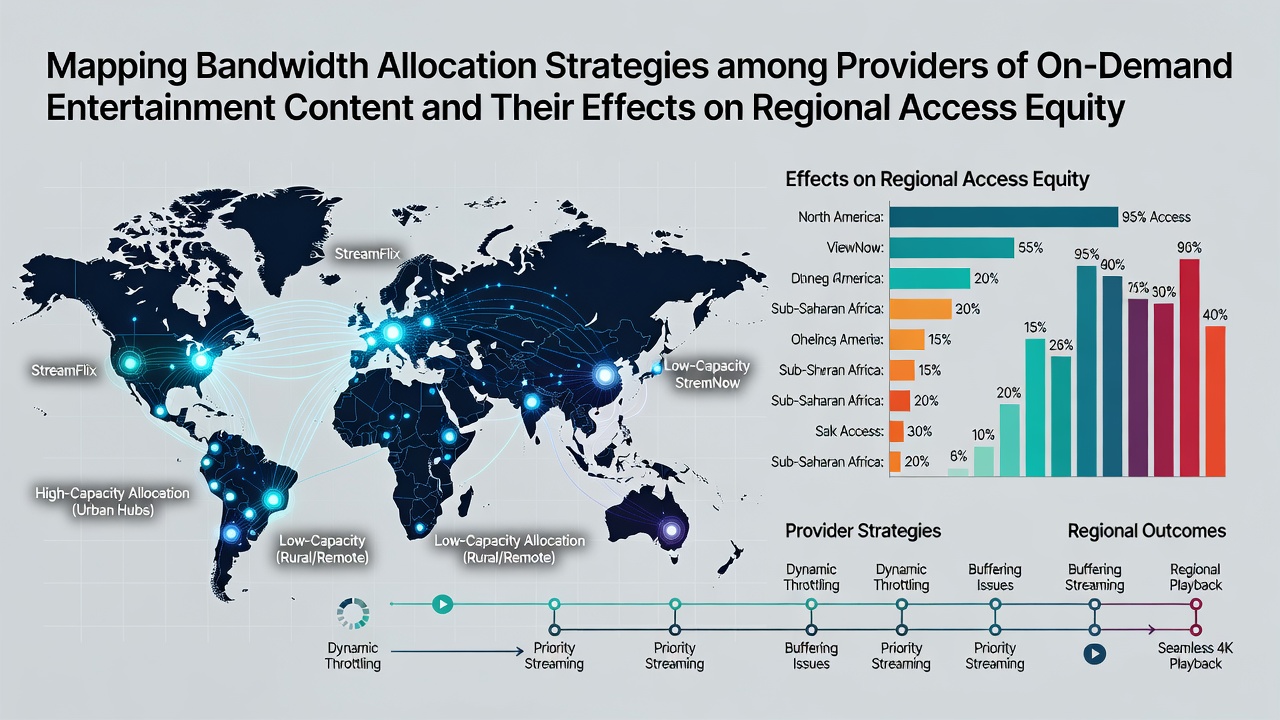
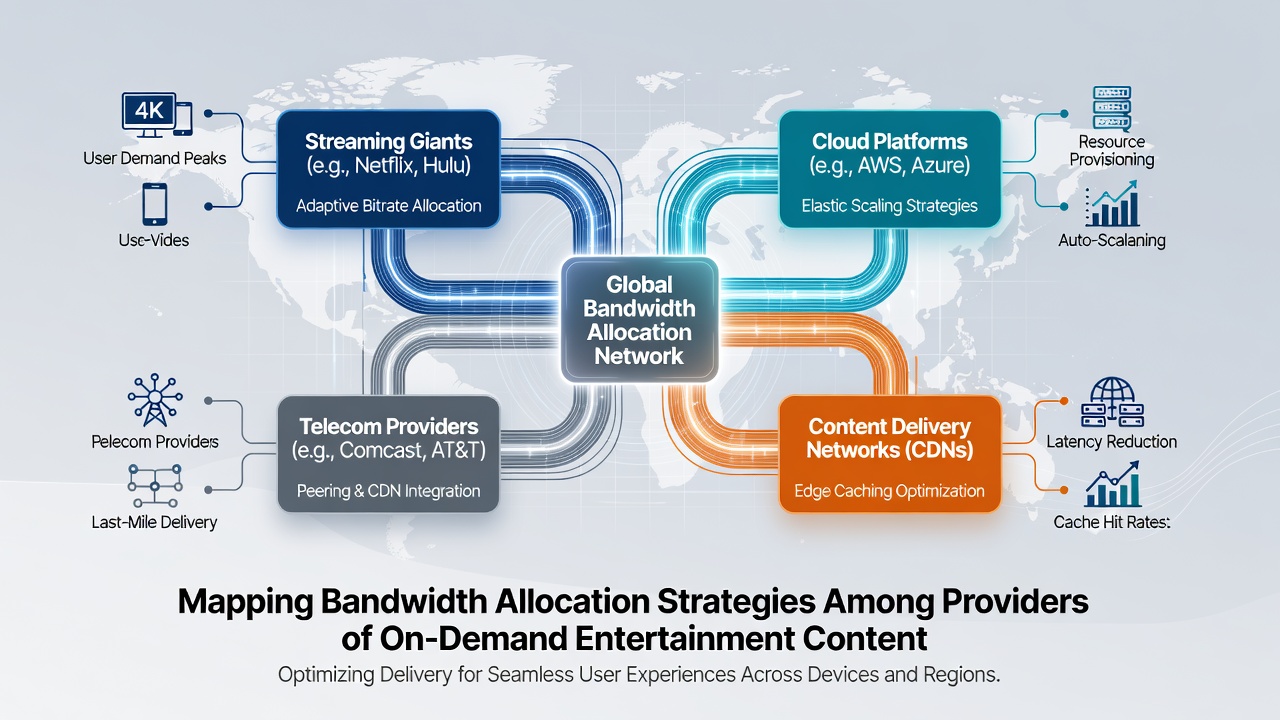
Providers of on-demand entertainment content manage bandwidth through a combination of content delivery networks, peering agreements wth internet service providers, and dynamic throttling protocols that adjust based on user density and subscription tiers. These methods determine how video data flows to different geographic areas, and researchers have documented variations in delivery speeds that correlate with population density and infrastructure investment levels. Data from regulatory filings show that major platforms prioritize urban centers where subscriber numbers justify higher-capacity links, while rural zones receive more limited allocations during peak hours.
Core Allocation Methods Employed by Providers
Streaming companies rely on several techniques to distribute bandwidth efficiently, including adaptive bitrate streaming that scales quality according to available throughput, along with cache placement strategies that position popular titles closer to high-demand regions. Observers note that providers often negotiate direct connections with local network operators to reduce latency, yet these arrangements tend to favor markets with established fiber backbones. Studies released in mid-2026 indicate that allocation algorithms factor in real-time demand forecasts, which leads to temporary boosts in metropolitan areas during new release windows and corresponding reductions elsewhere to maintain overall network stability.
Another approach involves tiered service levels where premium subscribers access higher-resolution streams first, while standard plans encounter automatic downshifts when regional capacity tightens. Figures from industry reports reveal that such systems emerged as standard practice by 2024 and continued evolving through August 2026 as providers responded to increased global viewership. Those who analyze traffic patterns find that these adjustments create measurable differences in average session durations between well-connected cities and outlying communities.
Regional Variations in Delivery Outcomes
Access equity issues surface most clearly when comparing delivery performance across continents and within individual countries. In North America, urban users in major hubs consistently report sustained 4K playback, whereas remote areas experience more frequent buffering even on comparable devices. European regulators have tracked similar patterns, with northern and western countries benefiting from denser interconnection points while southern and eastern zones show slower average load times during evening peaks. Data compiled by the Canadian Radio-television and Telecommunications Commission highlights how allocation priorities can widen gaps between provinces with differing broadband penetration rates.
Asia-Pacific markets present another layer of complexity, where providers must navigate varying regulatory requirements and infrastructure maturity. Countries with aggressive national broadband programs achieve more uniform distribution, yet others rely heavily on international transit routes that introduce additional bottlenecks. Academic analyses from research institutions in Australia and Singapore demonstrate that cache density directly influences equity metrics, with regions hosting fewer edge servers facing systematic disadvantages in content freshness and playback reliability.
Regulatory and Infrastructure Responses
Government agencies have begun examining these allocation practices more closely, particularly after 2025 reports documented persistent speed differentials. The Federal Communications Commission in the United States has incorporated streaming performance data into its broadband equity mapping initiatives, while the European Commission tracks cross-border delivery consistency as part of its digital single market objectives. Industry groups such as the Streaming Video Alliance have published guidelines encouraging more transparent reporting of allocation criteria, although adoption remains uneven across providers.
Infrastructure upgrades play a decisive role in mitigating disparities, and several nations have tied public funding to requirements for equitable bandwidth distribution. Projects completed by August 2026 in parts of Latin America and Africa incorporated dedicated peering arrangements that improved baseline access for on-demand services. Those monitoring these developments note that success depends on coordination between content platforms and local carriers rather than unilateral decisions by either side.
Measuring Equity Impacts Over Time
Longitudinal studies track how allocation decisions translate into viewer behavior across demographics. Metrics such as average daily viewing minutes, abandonment rates during buffering events, and device compatibility reveal patterns that align with bandwidth priority zones. Research from university-affiliated labs shows that sustained lower allocations correlate with reduced engagement in niche content categories, which in turn affects content investment decisions by providers. The cycle reinforces existing regional differences unless offset by policy interventions or technological shifts like improved compression standards.
Providers continue refining their models in response to both competitive pressures and external scrutiny, with some experimenting with community-level caching pilots that aim to balance loads more evenly. Evidence collected through 2026 suggests these experiments yield modest gains in underserved areas when paired with local infrastructure support, though scale remains limited compared to core markets.
Conclusion
Bandwidth allocation strategies among on-demand entertainment providers shape access patterns in ways that reflect both technical constraints and commercial priorities. Regional equity outcomes depend on the interplay of network agreements, regulatory oversight, and ongoing infrastructure development, with data indicating persistent differences that evolve alongside technological capabilities. Continued monitoring by independent bodies and academic researchers provides the factual foundation for assessing whether future adjustments narrow or widen these gaps across diverse geographic contexts.