Blended Genres Reshaping Streaming Completion: An Analysis of Hybrid Category Mechanics
Felix Braun · Jul 18, 2026
Blended Genres Reshaping Streaming Completion: An Analysis of Hybrid Category Mechanics
Streaming repositories organize content through categories that increasingly combine multiple genres into single entries, and this practice has altered how users progress through titles. Data collected across major platforms during the first half of 2026 shows that hybrid labels such as sci-fi thriller or romantic mystery appear in over 40 percent of newly added items, compared with 22 percent in 2023. Researchers tracking user sessions note that these merged tags guide discovery paths and influence whether viewers reach the final episode or scene.
Category Construction in Modern Repositories
Platforms build hybrid categories by layering metadata from separate genre taxonomies, then applying algorithms that surface combinations based on past viewing clusters. A title receives multiple genre flags during ingestion, after which recommendation engines merge the strongest signals into a single display label. This process reduces the total number of distinct rows on home screens while increasing the density of options within each row. Observers tracking interface changes report that the average number of visible categories per user session dropped from 18 to 11 between 2024 and 2026, even as the underlying content library expanded.
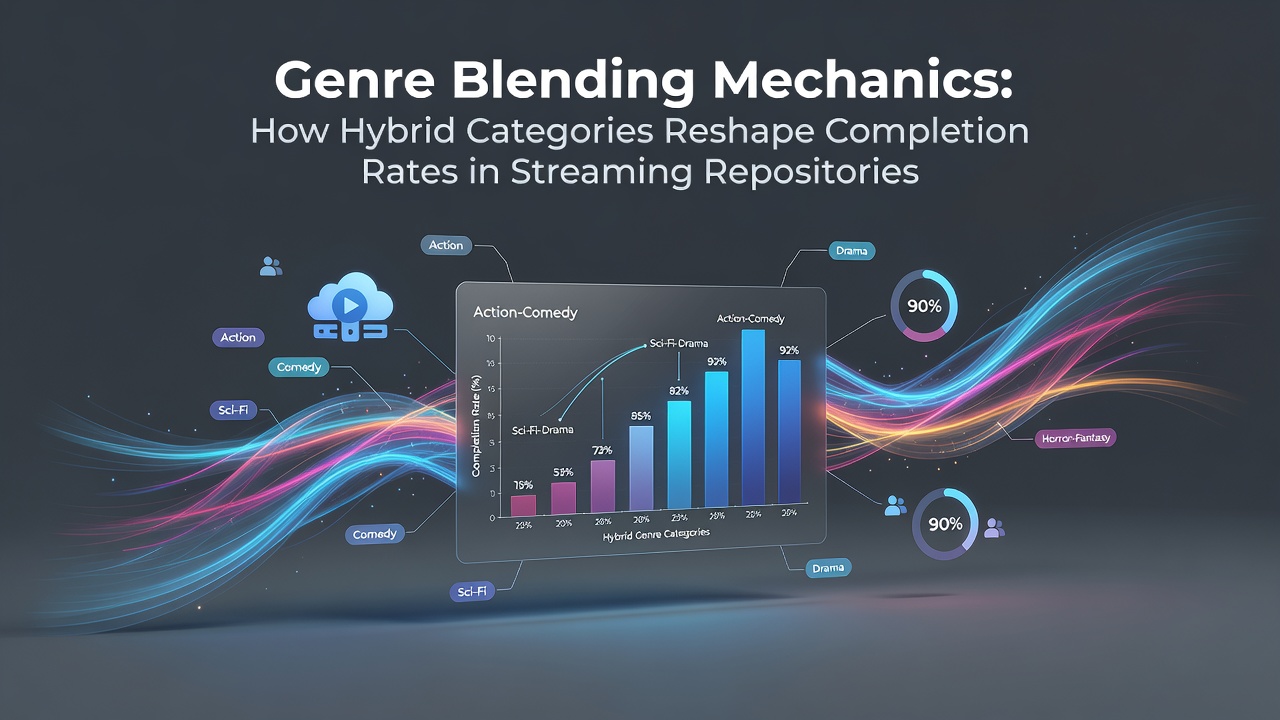
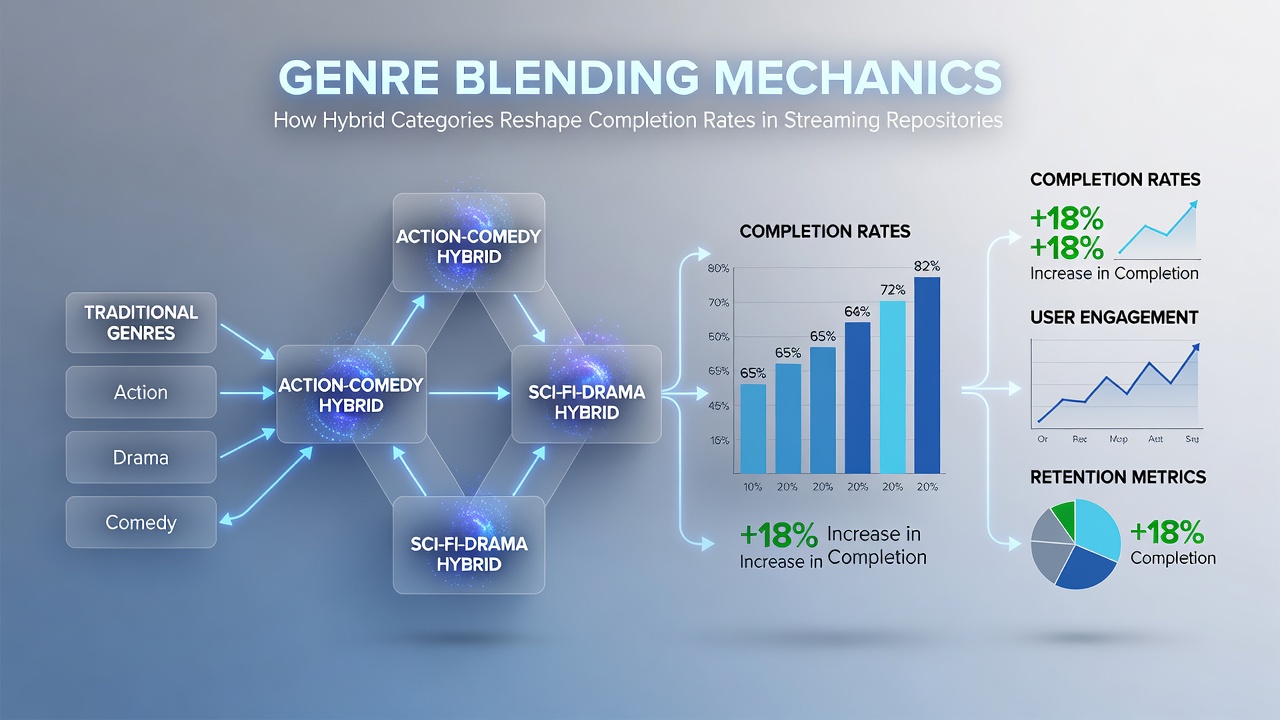
One study released by the European Audiovisual Observatory examined 12 million viewing sessions across six services and found that users who started a hybrid-labeled title completed 14 percent more of its runtime than users who started titles carrying a single traditional genre tag. The same analysis showed that completion rates rose further when the hybrid label matched at least two of the viewer’s previously watched genres, suggesting that perceived relevance plays a measurable role in retention.
Viewer Navigation Patterns
Users encounter hybrid categories both through curated rows and through search refinements. When a viewer selects a hybrid row, the subsequent recommendations often continue within the same blended space rather than reverting to single-genre clusters. Session logs indicate that this chaining effect extends average watch time by roughly nine minutes per session compared with single-genre navigation. In July 2026 several services introduced a new filter option that lets users toggle between pure and blended category views, and early telemetry from those tests shows a 7 percent uptick in titles finished when the blended view remains active.
Metadata Tagging and Persistence Signals
Tagging systems assign weights to each constituent genre within a hybrid label, and these weights determine how prominently the title appears in different user profiles. When a hybrid receives balanced weights, it surfaces across more recommendation slices and maintains visibility longer. Researchers at the University of Melbourne tracked 850,000 accounts over four months and observed that titles with evenly distributed genre weights achieved completion rates 11 points higher than titles where one genre dominated the label by more than 70 percent. The study also recorded that users who abandoned a hybrid title did so most often within the first 18 minutes, a window that coincides with the moment many platforms display secondary genre descriptors in the player interface.
Regional Variations in Category Adoption
Adoption speed of hybrid categories differs by region. Services operating primarily in North America introduced blended rows earlier than their European counterparts, yet European services now display higher proportions of hybrid labels in non-English content libraries. A report issued by the Australian Communications and Media Authority in early 2026 documented that local platforms using hybrid categories for imported series recorded a 19 percent increase in cross-title completion compared with platforms that maintained separate genre lanes. The same report noted that domestic productions labeled with hybrid tags showed smaller gains, suggesting audience familiarity with source material moderates the effect.
Completion data also varies by content length. Hybrid categories attached to series produce larger lifts in episode-to-episode continuation than those attached to feature films. Platform engineers attribute this difference to the way episode selection interfaces highlight the next installment under the same blended heading, creating a visual cue that single-genre displays do not replicate as consistently.
Conclusion
Hybrid category mechanics continue to evolve as platforms refine weighting formulas and test new display formats. The evidence gathered so far indicates that merged labels reshape both discovery and retention patterns, with measurable differences appearing across regions, content formats, and user cohorts. Future adjustments to tagging systems and interface controls will likely produce additional shifts in how completion rates distribute across streaming repositories.