Charting the VFX Pipeline in Contemporary Cinema Releases
Ben Vogel · Aug 4, 2026
Charting the VFX Pipeline in Contemporary Cinema Releases
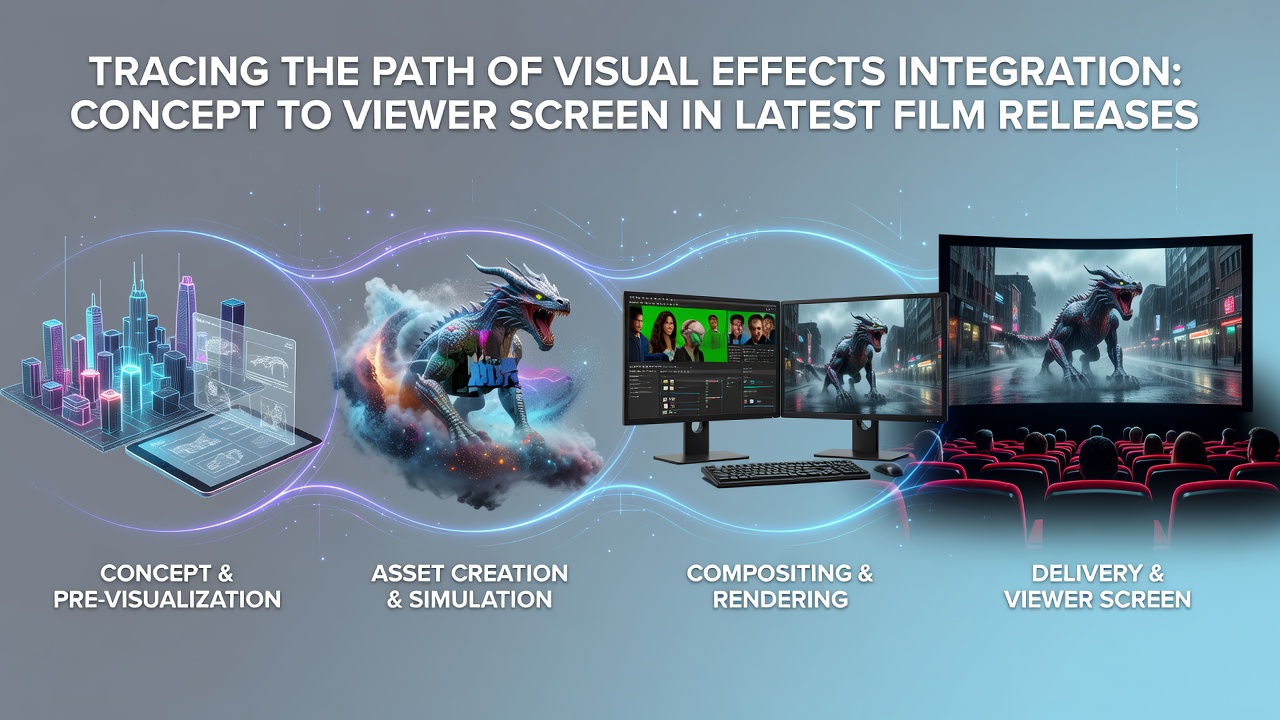
Modern film productions integrate visual effects through a structured sequence of stages that begin with initial concept sketches and end with final pixel output on theater screens and streaming platforms, and observers note that this process has grown more complex with each passing year as studios release larger-scale projects. Data from industry reports indicate that visual effects teams now contribute to over 90 percent of major studio films, while production timelines extend across multiple continents to accommodate specialized crews.
Early Concept and Pre-Visualization Stages
Pre-production teams start by translating script descriptions into storyboards and digital pre-visualization tools, and researchers at institutions such as the University of Southern California have documented how these early assets guide decisions about camera placement and asset scale long before live-action photography begins. Software packages allow directors to review rough animations that represent key sequences, and this phase often incorporates input from cinematographers who evaluate lighting references against planned environments. In August 2026 several upcoming releases, including sequels to established franchises, will rely on these pre-visualization pipelines to coordinate international crews working across time zones.
Asset Creation and Technical Integration
Once concepts receive approval, modelers and texture artists build three-dimensional assets using reference photography and photogrammetry scans, while simulation specialists develop systems for cloth, water, and particle behavior that match physical laws observed in the real world. Technical directors then rig these models for animation and integrate them with live-action plates captured on set, and studies published by the Visual Effects Society show that asset libraries now contain millions of reusable elements that reduce redundancy across multiple productions. Pipeline managers track versions through cloud-based systems that allow simultaneous edits by teams located in Los Angeles, London, and Wellington, ensuring consistency when shots move between facilities.
Compositing, Color, and Final Delivery
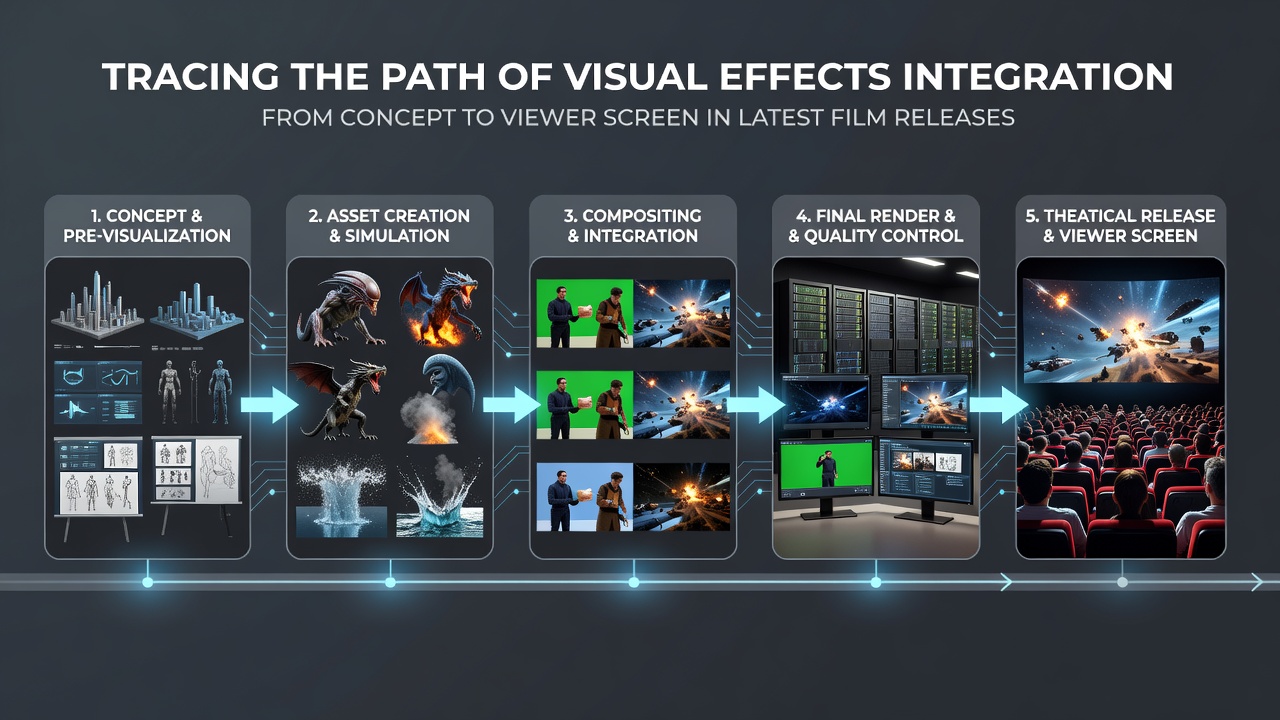
Compositing artists combine rendered layers with background plates, and they adjust matte edges, add atmospheric effects, and match grain structures so digital elements blend seamlessly with footage shot on location or on soundstages. Color grading teams apply look-up tables developed in consultation with cinematographers, and final quality control checks verify that images hold detail across theatrical projection systems and various home viewing formats. Reports compiled by the Australian Department of Infrastructure, Transport, Regional Development, Communications and the Arts highlight how these finishing steps account for a growing share of overall production budgets because audience expectations for image fidelity continue to rise.
Distribution Across Viewing Platforms
Once approved, master files undergo encoding for multiple distribution channels, including digital cinema packages for theaters and adaptive bitrate streams for online services, and metadata tags embedded during this stage carry information about dynamic range and frame rate that playback devices interpret automatically. Observers note that facilities handling these encodes often perform additional passes to optimize for specific regional standards, such as those maintained by the European Broadcasting Union. The process concludes when encrypted files reach exhibition partners, completing a chain that can span eighteen months from first concept meeting to audience viewing.
Conclusion
Industry records demonstrate that the visual effects workflow operates as an interconnected series of specialized tasks performed by distributed teams, and each stage builds upon the previous one to deliver coherent imagery that audiences experience without interruption. Figures released by research groups tracking global production spending confirm continued investment in these pipelines, and the same data reveal incremental improvements in turnaround times as new tools and collaborative platforms enter regular use.