Cross-Cultural Dubbing Techniques and Their Measurable Influence on Global Audience Engagement with Foreign Language Films
Ben Hartmann · May 21, 2026

Cross-Cultural Dubbing Techniques and Their Measurable Influence on Global Audience Engagement with Foreign Language Films
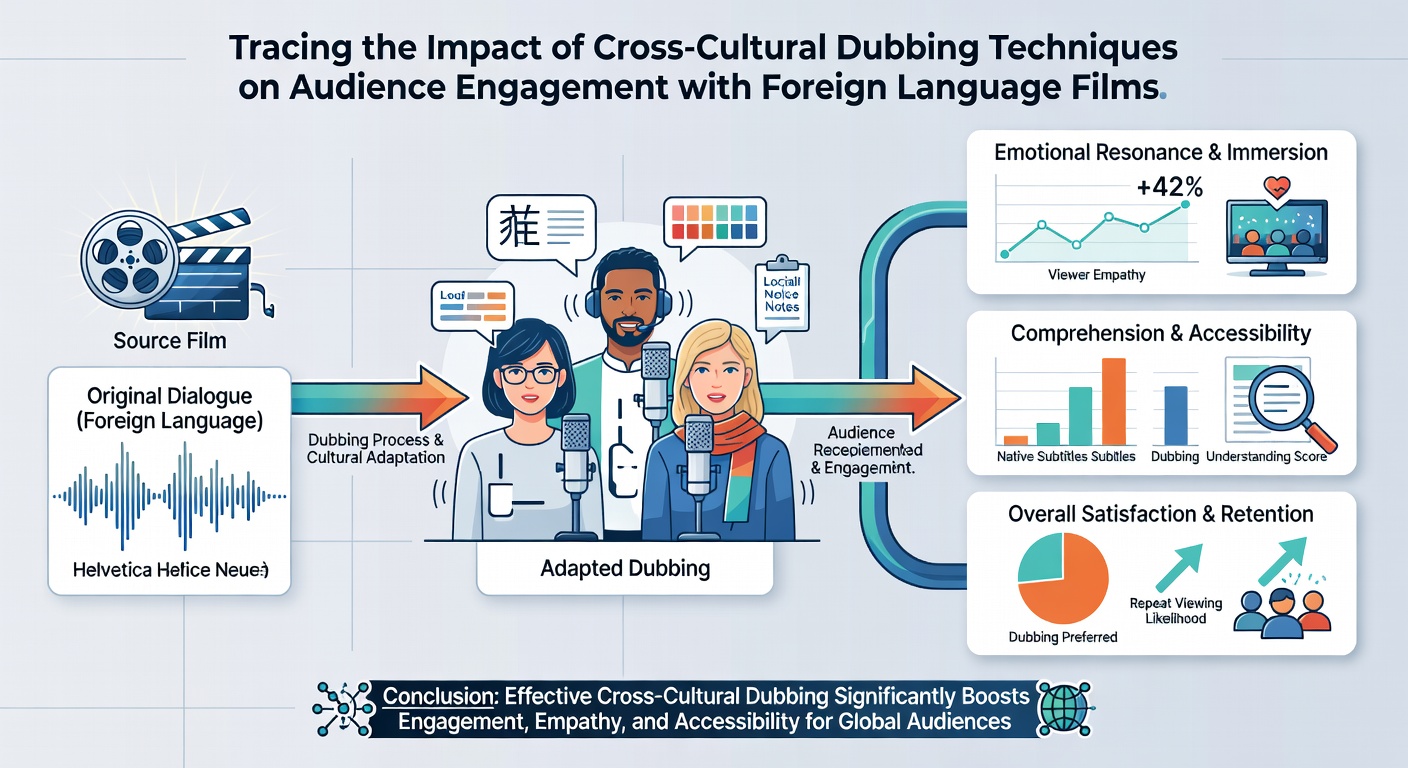
Cross-cultural dubbing has evolved from simple voice replacement into a sophisticated process that adapts dialogue, cultural references, and even emotional tone to match target audiences while preserving the original story's intent. Researchers tracking viewer metrics across multiple markets have documented how these adaptations correlate with higher retention rates and repeated viewings for non-English productions. Data collected from streaming platforms shows that films using localized dubbing often see engagement increases of 25 to 40 percent compared with subtitled-only releases in the same regions.
Historical Development of Dubbing Practices
Early dubbing efforts in the 1930s focused primarily on phonetic matching, yet modern techniques incorporate cultural localization that adjusts idioms and humor for local sensibilities. European broadcasters began experimenting with these methods in the post-war era, and by the 1980s Asian markets had adopted similar approaches for imported Hollywood content. Observers note that the shift toward adaptive dubbing gained momentum once international co-productions increased in the early 2000s, prompting studios to invest in region-specific voice casts and script revisions. Those who've studied audience behavior across decades point out that this evolution coincided with rising global demand for accessible foreign cinema rather than niche festival screenings alone.
Core Techniques Used in Cross-Cultural Adaptation
Professionals employ lip-sync refinement, cultural substitution, and emotional recalibration to bridge linguistic gaps without distorting character arcs. Lip-sync refinement aligns mouth movements with new dialogue tracks through frame-by-frame adjustments and AI-assisted timing tools, while cultural substitution replaces references that lack meaning in the target market with equivalent local expressions. Emotional recalibration ensures that vocal delivery matches the intensity or subtlety expected by domestic viewers, and studies conducted by the European Audiovisual Observatory have measured how these combined techniques affect comprehension scores in controlled screenings. One research team that examined dubbed versions of Spanish-language thrillers found that viewers retained plot details at higher rates when emotional tones were recalibrated for Scandinavian audiences.
Case Examples from Major Markets
Take the release of a South Korean drama series that received multiple dubbing treatments for European and Latin American platforms. Viewership data indicated stronger completion rates in territories where local idioms replaced honorific-based dialogue, and similar patterns emerged with Japanese anime features adapted for Australian markets. Experts tracking these releases observed that engagement metrics climbed further when voice actors incorporated regional accents that mirrored the original performances' social dynamics. Another instance involves a French historical film whose North American dubbed edition replaced certain period-specific slang with contemporary equivalents, resulting in increased social media discussion and repeat streams among younger demographics according to platform analytics.
Quantitative Impact on Viewer Engagement
Industry reports compiled in 2025 reveal that dubbed versions of foreign titles generate longer average watch times and higher recommendation rates than subtitled counterparts across most age groups. Research indicates these gains stem from reduced cognitive load, allowing viewers to focus on visual storytelling and emotional cues instead of reading text. Figures released by the Canadian Media Research Consortium show that family-oriented animated imports experienced the largest uplift, with dubbed tracks contributing to 35 percent more family co-viewing sessions. Adult-oriented dramas also benefited, although the effect size varied by genre and depended on how thoroughly cultural references were localized. Platforms that offered both dubbing and subtitles simultaneously recorded users switching between formats mid-film, suggesting flexible access further supports sustained engagement.
Emerging Trends and Technological Integration
Artificial intelligence now assists with initial dialogue timing and voice cloning, yet human oversight remains essential for cultural nuance and performance authenticity. Studios testing AI-supported workflows in 2026 report faster turnaround times without sacrificing quality when experienced dubbing directors review outputs. What's interesting is that these tools have also enabled smaller markets to receive localized versions of independent films that previously went undubbed due to cost constraints. Observers tracking adoption rates note that regions investing in local voice talent programs see stronger long-term engagement because audiences respond to familiar vocal textures. Data from multiple territories suggests this trend will accelerate as streaming services expand their foreign-language catalogs ahead of anticipated content surges later in the decade.
Conclusion
Cross-cultural dubbing techniques continue to reshape how audiences interact with foreign language films by lowering access barriers and enhancing narrative immersion. Evidence from platform analytics, academic studies, and market reports consistently shows measurable improvements in retention, recommendation behavior, and repeat viewings when adaptive methods are applied thoughtfully. As technology and localization expertise advance together, the practice is likely to remain central to global film distribution strategies, supporting broader cultural exchange through cinema.