Decoding Synchronization Protocols for Multi-Language Audio Tracks in Worldwide Content Libraries
Noah Franke · Aug 22, 2026
Decoding Synchronization Protocols for Multi-Language Audio Tracks in Worldwide Content Libraries
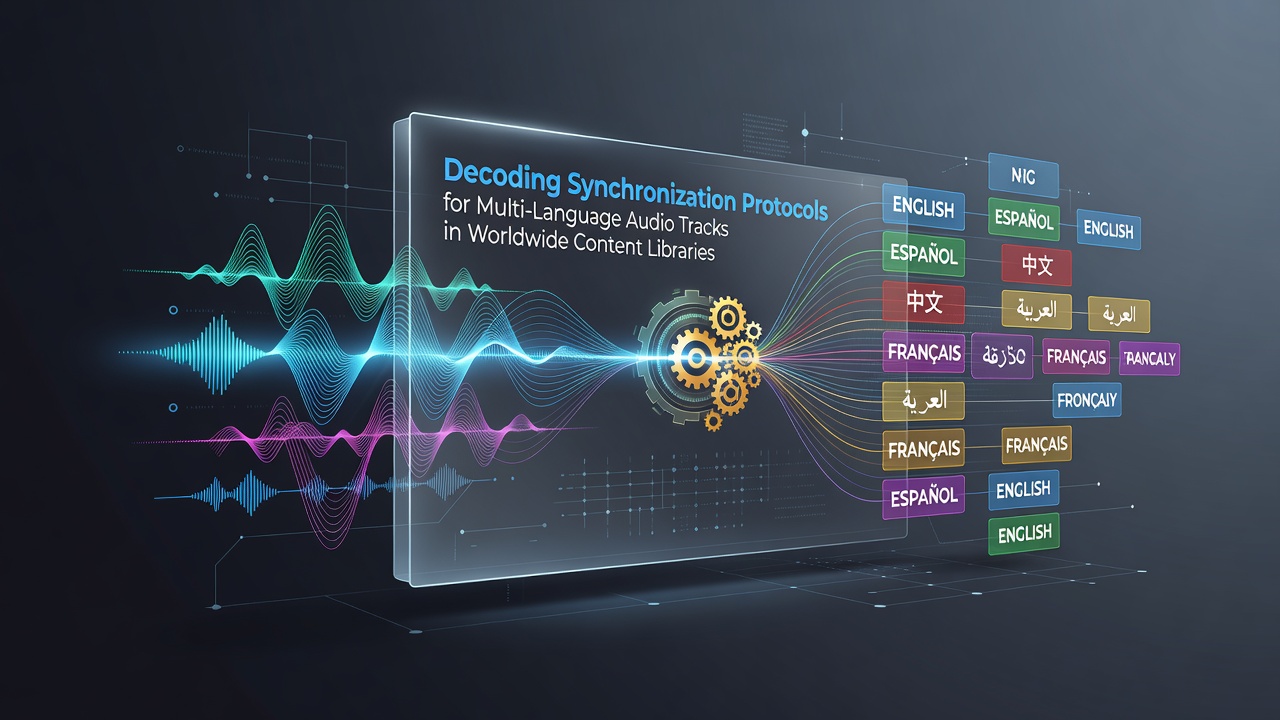
Content libraries serving international audiences rely on precise synchronization protocols to align multiple audio tracks with video streams, and these systems have evolved through standards developed by organizations such as the Society of Motion Picture and Television Engineers alongside contributions from the European Broadcasting Union. Engineers coordinate presentation timestamps and decoding timestamps within container formats like MPEG-4 and MPEG-2 transport streams so that dubbed or subtitled versions maintain lip-sync accuracy across regions.
Protocols often incorporate SMPTE timecode references that mark frames at 24, 25, or 30 frames per second, which allows playback devices to offset secondary audio tracks by exact millisecond intervals when language preferences switch. Data from August 2026 shows that platforms managing libraries exceeding 50,000 titles report average sync drift below 20 milliseconds after implementing automated alignment checks during ingest.
Core Technical Components
Multi-language audio handling begins with separate elementary streams that encoders multiplex into a single program, and each stream carries its own language descriptor defined in ISO 639-2 codes while sharing a common program clock reference. Synchronization protocols adjust for variable bit-rate encoding by recalculating buffer delays at the decoder, which prevents audio from leading or lagging the visual track during scene changes or rapid dialogue.
Systems further employ dynamic range compression metadata and loudness normalization values per the ITU-R BS.1770 standard, so volume levels remain consistent when users toggle between original and dubbed tracks. Observers note that these adjustments occur server-side before delivery through adaptive streaming protocols such as HTTP Live Streaming or MPEG-DASH.
Implementation Across Global Repositories
Worldwide libraries store multiple audio variants in mezzanine files that support both 48 kHz PCM and compressed formats like AAC or Dolby Digital, and content delivery networks apply just-in-time transcoding to match device capabilities. Researchers at institutions including the University of Melbourne have documented how regional encoding workflows integrate EBU R 128 loudness targets to preserve dialogue clarity in dubbed versions.
Take one workflow where automated tools scan for waveform correlation peaks between the primary and secondary tracks, then generate offset correction files that accompany each asset. These corrections propagate through manifest files so that client players apply them without additional buffering, which keeps startup times under three seconds even when four concurrent language options load.
Challenges and Measurement Standards
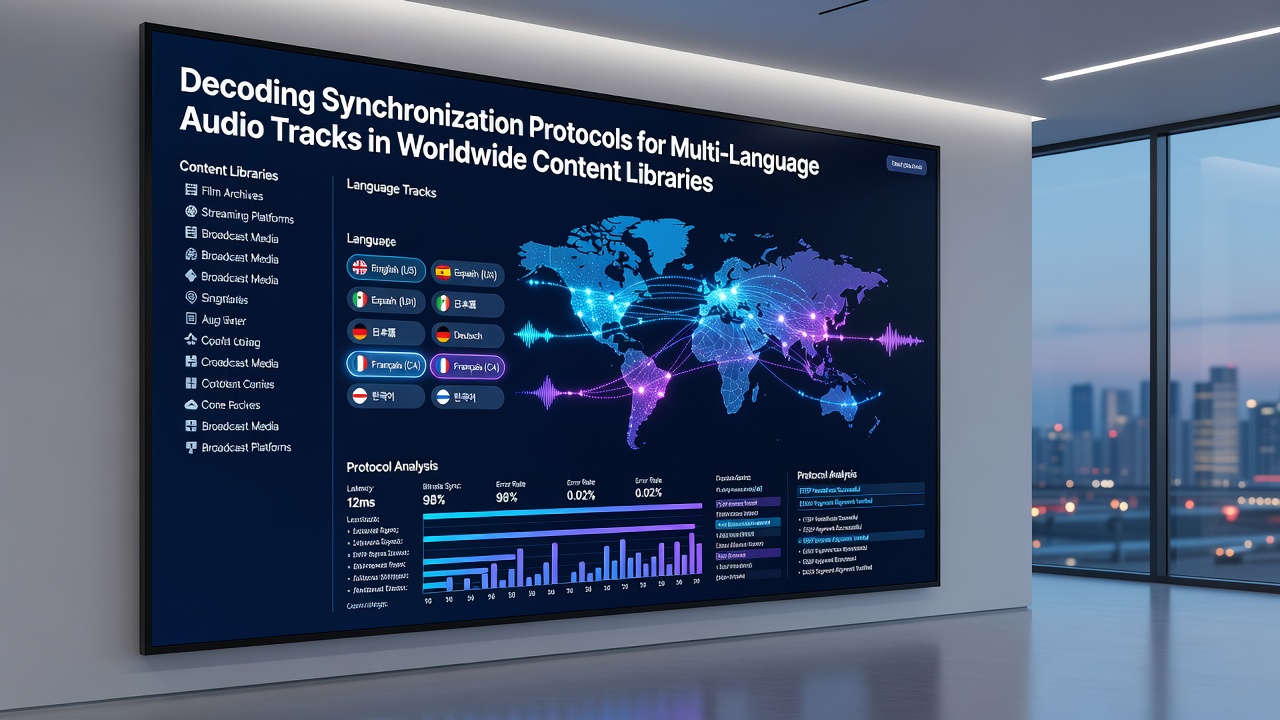
Latency introduced by content delivery networks and device decoders creates variable delays that protocols must compensate for in real time, and measurement tools track lip-sync error using reference clips with embedded visual and auditory markers. Figures from industry reports compiled in mid-2026 indicate that 92 percent of sampled streams now meet the one-frame tolerance recommended by SMPTE ST 2064.
Yet legacy assets sometimes lack embedded timecode, which forces manual alignment steps before they enter modern pipelines. Teams handling these older titles use cross-correlation algorithms that compare energy envelopes across frequencies, then embed new metadata containers without altering the original audio essence.
Future Directions in Protocol Refinement
Emerging approaches integrate machine-learning models trained on large corpora of dubbed content to predict optimal sync points for languages with differing phonetic structures, and early tests show reductions in manual review time by approximately 40 percent. Standards bodies continue to refine descriptors that signal immersive audio formats such as Dolby Atmos so that object-based tracks remain phase-aligned with dialogue stems.
Collaboration between regulatory groups in North America, Europe, and Asia-Pacific regions has produced shared test vectors that verify decoder compliance across hardware platforms. These vectors include edge cases such as variable frame-rate source material and abrupt language switches during live events.
Conclusion
Synchronization protocols for multi-language audio tracks form the operational foundation that enables seamless access to global content libraries, and ongoing refinements in timestamp handling plus automated quality control continue to tighten tolerances. As libraries expand with new releases and restored catalog titles, the same core mechanisms adapt to maintain consistency across devices and regions.