Device Fragmentation and Its Challenges for Consistent Playback of Latest Releases
Ben Hartmann · Jul 9, 2026

Device Fragmentation and Its Challenges for Consistent Playback of Latest Releases
Device fragmentation creates persistent hurdles for streaming services that deliver new film and television releases across multiple hardware types, operating systems, and network conditions. Different screen resolutions, codec support levels, processor capabilities, and firmware versions force content providers to manage numerous playback paths simultaneously, which often leads to interruptions during initial rollout periods for high-profile titles.
Core Technical Barriers Created by Hardware Diversity
Manufacturers release devices with varying display specifications and audio processing units, while operating system updates roll out at uneven rates across brands and regions. A new series episode encoded with the latest AV1 compression may render smoothly on flagship Android phones yet encounter decoding failures on older smart TV chipsets that lack native support. Researchers at institutions such as the University of Melbourne have documented how these mismatches force fallback to lower-bitrate streams, reducing visual fidelity for viewers who expect uniform quality on launch day.
Network variability compounds the problem because mobile data connections fluctuate more than fixed broadband lines, prompting adaptive bitrate algorithms to switch resolutions mid-stream. Studies tracking viewer sessions in July 2026 revealed that devices running older versions of iOS experienced more frequent rebuffering events than those updated to current firmware, particularly when accessing 4K HDR content shortly after its global debut.
Platform-Level Adjustments and Their Limitations
Major services maintain separate encoding pipelines and client applications tailored to each ecosystem, yet complete parity remains elusive. Console-based players from Sony and Microsoft handle high-dynamic-range output differently than set-top boxes from Roku or Amazon, requiring developers to test subtitle rendering, audio track synchronization, and chapter navigation on each target. When a major studio releases a blockbuster simultaneously across theaters and home platforms, compatibility patches often arrive days later for niche hardware categories.
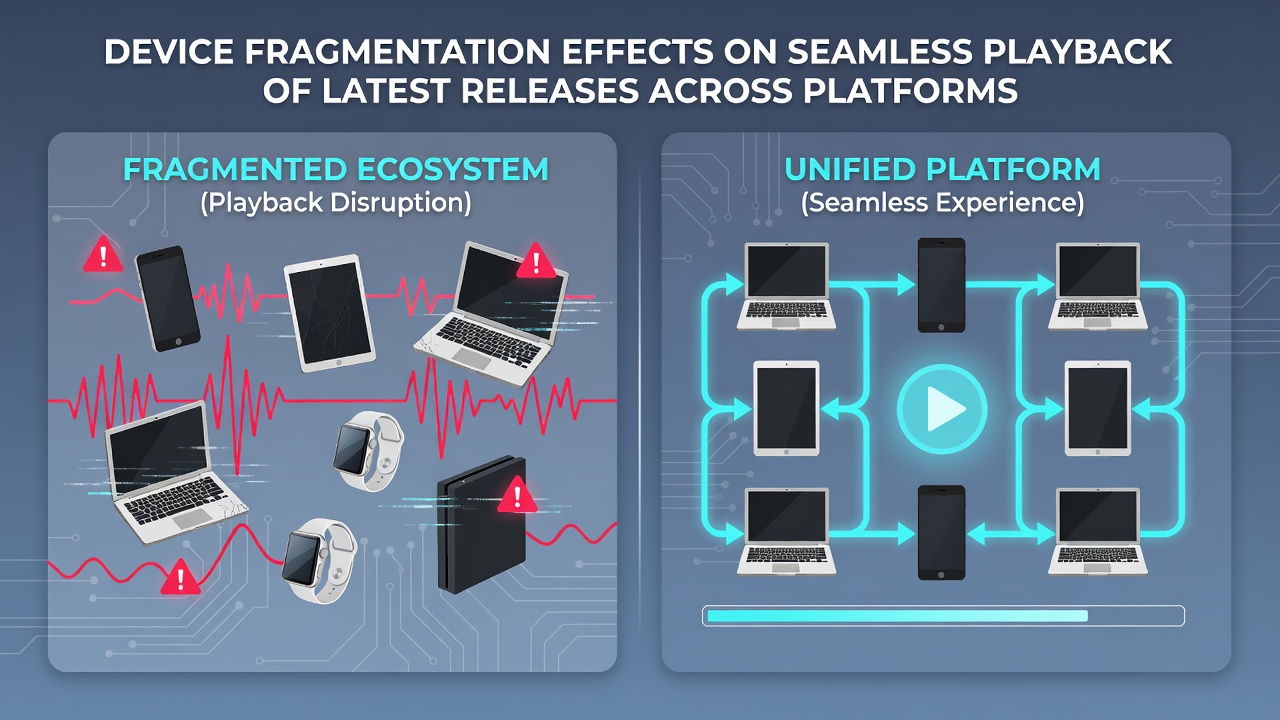
Content delivery networks attempt to route users toward optimal edge servers, but geographic differences in device adoption rates create uneven demand patterns. Markets with high penetration of budget Android tablets report elevated instances of dropped frames compared with regions dominated by premium integrated television sets, according to data compiled by the Canadian Radio-television and Telecommunications Commission.
Regional Patterns and Viewer Outcomes
European regulatory filings indicate that households mixing legacy and current-generation devices encounter the highest rates of quality inconsistency during peak viewing hours. Viewers in Australia who combine 5G handsets with older Chromecast units frequently observe audio desync issues when switching between devices mid-episode. These patterns persist because manufacturers prioritize flagship models during certification processes, leaving secondary product lines with delayed or incomplete support for emerging streaming protocols.
Academic analyses of session logs further show that fragmentation effects intensify when services introduce interactive features such as alternate endings or multi-language dubs. Devices lacking sufficient GPU acceleration display longer loading times before these options become selectable, creating staggered user experiences across the same household.
Industry Responses and Ongoing Developments
Standards organizations continue to promote unified codec adoption and mandatory certification programs, yet implementation timelines vary by manufacturer. Some platforms now include automated device profiling that detects hardware capabilities at session start and selects appropriate streams without user intervention. Despite these advances, edge cases involving custom ROM installations or region-locked firmware updates continue to surface during high-traffic premiere windows.
Trade groups representing consumer electronics producers have begun publishing interoperability guidelines that reference test results from independent laboratories, helping reduce the frequency of post-launch hotfixes. These measures address symptoms rather than root causes, since the underlying diversity of form factors shows no sign of decreasing.
Conclusion
Device fragmentation continues to shape how viewers access new releases, producing measurable differences in playback stability and visual quality across hardware categories. Data from multiple regulatory and academic sources confirm that technical mismatches between encoding pipelines and device capabilities generate recurring friction points, particularly during simultaneous global launches. Ongoing standardization efforts and adaptive delivery techniques mitigate some effects, yet the expanding range of connected screens ensures these challenges remain relevant for service operators and content distributors alike.