Heatmap Analytics Uncover Peak Hours for Niche Genres in Global Digital Libraries
Felix Braun · Aug 18, 2026
Heatmap Analytics Uncover Peak Hours for Niche Genres in Global Digital Libraries
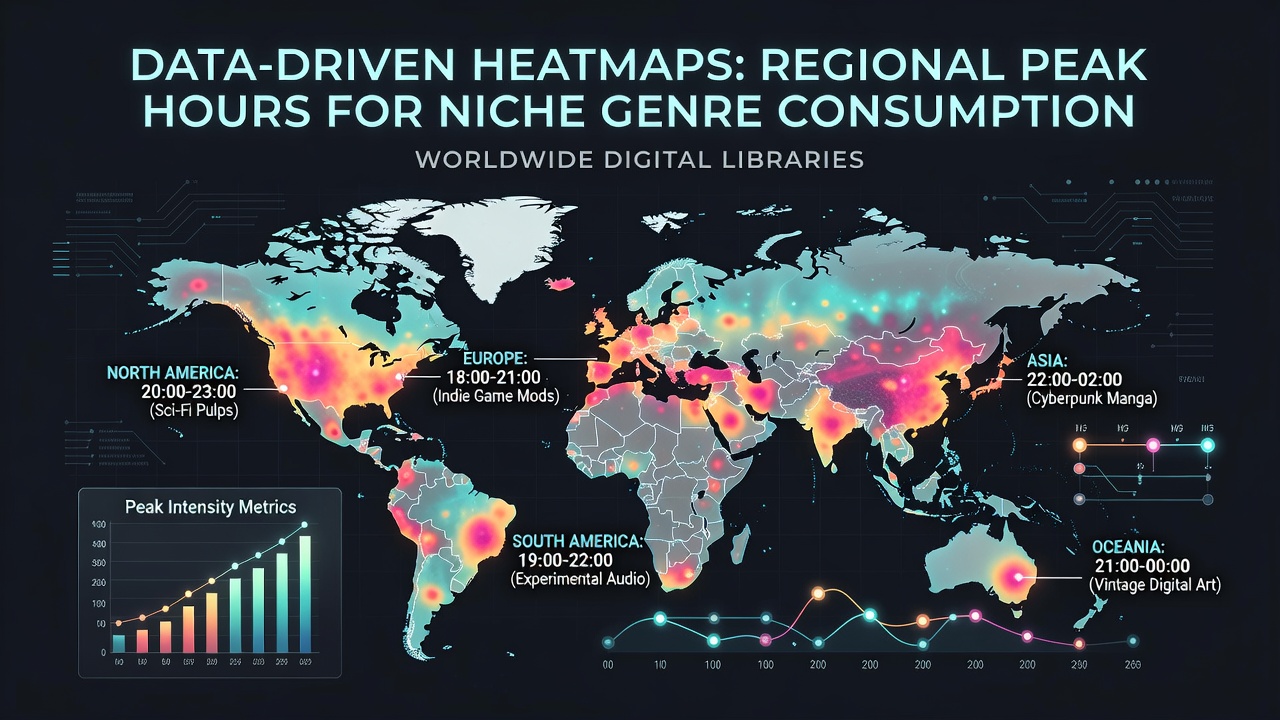
Data analysts have turned to heatmaps to map consumption rhythms for specialized genres within digital libraries spanning multiple continents, and these visual tools reveal distinct temporal clusters that shift according to geography and content type. Researchers aggregate timestamped user interactions from streaming repositories to generate color-coded grids where intensity corresponds to activity volume during specific hours, allowing observers to identify when audiences in different regions engage most with genres such as historical documentaries, experimental animation, or regional folk music archives. Studies released in August 2026 from academic consortia indicate that these patterns emerge consistently when datasets exceed several million interaction logs collected over twelve-month periods.
Building Heatmaps from Library Interaction Logs
Teams compile raw access records that include user location, genre tags, and precise timestamps before applying clustering algorithms that normalize activity across time zones, and the resulting matrices display warmer hues during elevated engagement windows while cooler tones mark quieter intervals. Observers note that normalization accounts for population density variations so that smaller markets do not disappear against larger ones, and cross-referencing with metadata tagging systems ensures genre categories remain consistent even when hybrid titles appear. One study revealed that incorporating device type and connection speed further refines the grids by separating mobile evening spikes from desktop afternoon plateaus.
Regional Patterns Across Continents
Heatmaps centered on European repositories frequently display elevated activity for niche literary adaptations between 19:00 and 23:00 local time, whereas North American grids show stronger midday clusters for independent science programming between 12:00 and 15:00, and analysts attribute these differences partly to work schedules and partly to content licensing windows that release new material at staggered hours. In Asia-Pacific zones the same datasets highlight late-night surges for experimental short films after 23:00, coinciding with reduced latency on regional content delivery networks. Data from the Statistics Canada digital economy reports corroborate similar midday concentrations for archival audio collections among Canadian users during weekday lunch periods.
Researchers cross-validate these observations against public usage statistics released by the Australian Bureau of Statistics, confirming that genre-specific peaks align with school holiday calendars in southern hemisphere markets where afternoon activity rises noticeably for youth-oriented historical simulations. Those who have examined multi-year archives observe that seasonal shifts remain modest compared with daily rhythms, although holiday weekends compress evening peaks by roughly two hours across several tested regions.
Genre-Specific Temporal Signatures
Within the broader category of niche consumption, heatmaps isolate tighter windows for certain sub-genres: baroque music libraries register highest access between 07:00 and 09:00 in Mediterranean countries, while urban exploration documentaries peak between 21:00 and 01:00 in Latin American datasets. Analysts overlay these signatures onto global time-zone maps to forecast simultaneous demand surges that challenge content delivery infrastructure, and network operators use the forecasts to pre-position cache copies ahead of anticipated load. Figures released in mid-2026 show that accurate peak-hour prediction reduced buffering incidents by measurable margins in coordinated trials conducted across three continents.
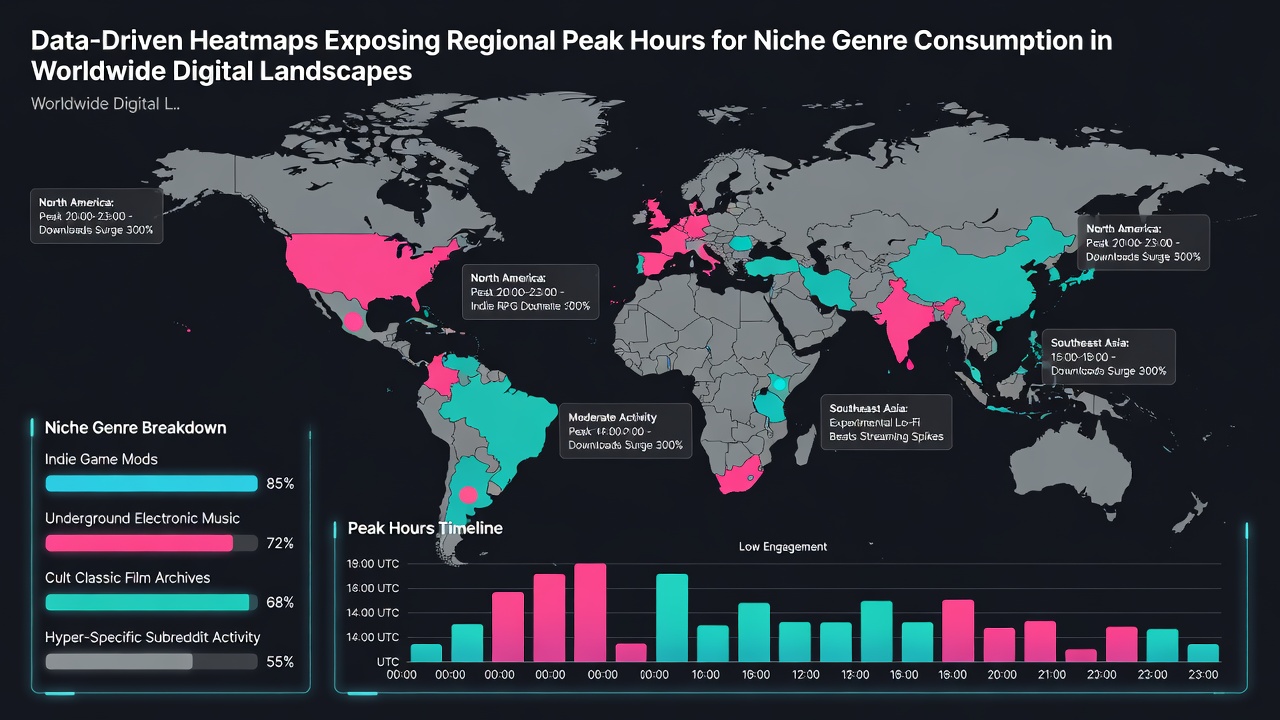
Metadata tagging mechanisms that link genre hybrids to audience persistence further sharpen the heatmaps by separating pure-category spikes from crossover interest, and observers note that titles carrying multiple tags sometimes generate secondary peaks that would otherwise remain hidden. One analysis of worldwide repositories demonstrated that experimental animation exhibits both an early-evening family window and a late-night adult window within the same geographic cluster when hybrid tags are preserved during processing.
Implications for Library Infrastructure
Library administrators apply these visualizations when scheduling maintenance windows and content refreshes so that updates occur during documented low-activity intervals, thereby minimizing service disruption for active users. Industry organizations such as the International Federation of Library Associations have published guidelines encouraging adoption of heatmap-informed capacity planning, and preliminary adoption data indicate improved uptime metrics in participating institutions. The same datasets also inform regional licensing negotiations because rights holders receive clearer pictures of when their specialized catalogs generate measurable engagement.
Conclusion
Heatmap techniques continue to evolve as digital libraries expand their holdings and user bases, and ongoing refinements in data granularity promise even finer resolution of regional consumption rhythms. Observers anticipate that integration with emerging privacy-preserving analytics frameworks will allow broader sharing of these insights without compromising individual records, while maintaining the factual grounding that current studies already provide across continents.