Patterns of Audience Retention in Relation to Narrative Pacing Across Diverse TV Genres
Felix Braun · Jun 20, 2026
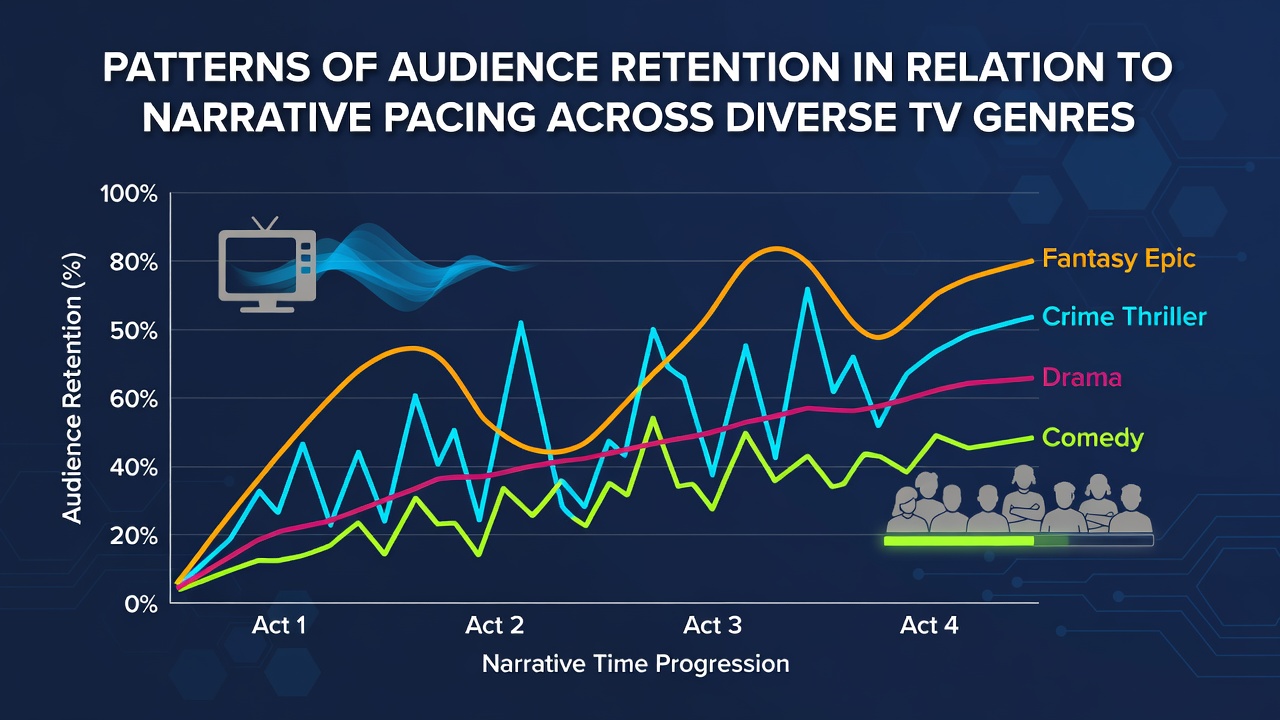
Patterns of Audience Retention in Relation to Narrative Pacing Across Diverse TV Genres
Television producers and streaming platforms track audience retention through detailed metrics that reveal how narrative pacing influences viewer drop-off rates across genres, and studies from multiple regions continue to map these connections in granular detail. Data collected through platform analytics shows that slow-burn dramas often maintain higher completion percentages when episodes build tension gradually over extended sequences, whereas fast-cut action series experience sharper declines if pacing accelerates without sufficient character development breaks. Researchers at institutions in North America and Europe have compiled datasets indicating that comedy formats retain audiences longer when punchlines arrive at consistent intervals rather than clustering in rapid succession, and this pattern holds steady in both traditional broadcast and on-demand environments.
Retention Dynamics in Dramatic Series
Drama narratives rely on measured pacing that allows emotional arcs to unfold across multiple scenes, and evidence from viewer behavior logs demonstrates sustained engagement when episodes avoid abrupt time jumps or unresolved subplots that confuse the flow. One analysis released in June 2026 by the Australian Communications and Media Authority examined retention in serialized dramas and found that shows employing deliberate pauses between major revelations kept 15 to 20 percent more viewers through season finales compared with faster-paced counterparts. Those patterns emerge because audiences form stronger attachments to characters when given time to process motivations, while rushed revelations tend to prompt exits midway through episodes. Platforms adjust episode lengths accordingly, extending runtimes in prestige dramas to accommodate slower rhythms that align with documented retention benefits.
Pacing Variations in Comedy and Procedural Formats
Comedy series operate under different retention rules where rapid joke delivery can fatigue viewers unless balanced by quieter character moments, and industry reports confirm higher rewatch rates when pacing incorporates breathing room between comedic beats. Procedural shows that interweave case resolutions with personal storylines maintain steadier audience figures when the central mystery advances at a moderate clip rather than resolving every thread in the opening act. Observers note that audiences return to comedies featuring episodic structures with predictable rhythm because familiarity reduces cognitive load, allowing humor to land more effectively across repeated viewings. Data from multiple streaming services indicates comedy retention dips sharply during seasons that shift to overly serialized pacing without sufficient standalone payoffs, prompting producers to recalibrate episode construction.
Action, Thriller, and Genre Hybrids
Action-oriented programs and thrillers demonstrate pronounced sensitivity to pacing spikes, with retention metrics revealing steep declines when fight sequences or chase scenes dominate without narrative anchors. Hybrid genres that blend suspense with dramatic elements sustain longer watch sessions when pacing alternates between high-intensity set pieces and quieter investigative segments, according to figures compiled by European media research groups. Viewers tend to abandon thrillers that maintain unrelenting tension for entire episodes, whereas those incorporating measured downtime between twists achieve completion rates that exceed genre averages by noticeable margins. Platforms have responded by testing variable episode structures that insert reflective pauses, and these adjustments correlate with improved retention in pilot testing across international libraries.
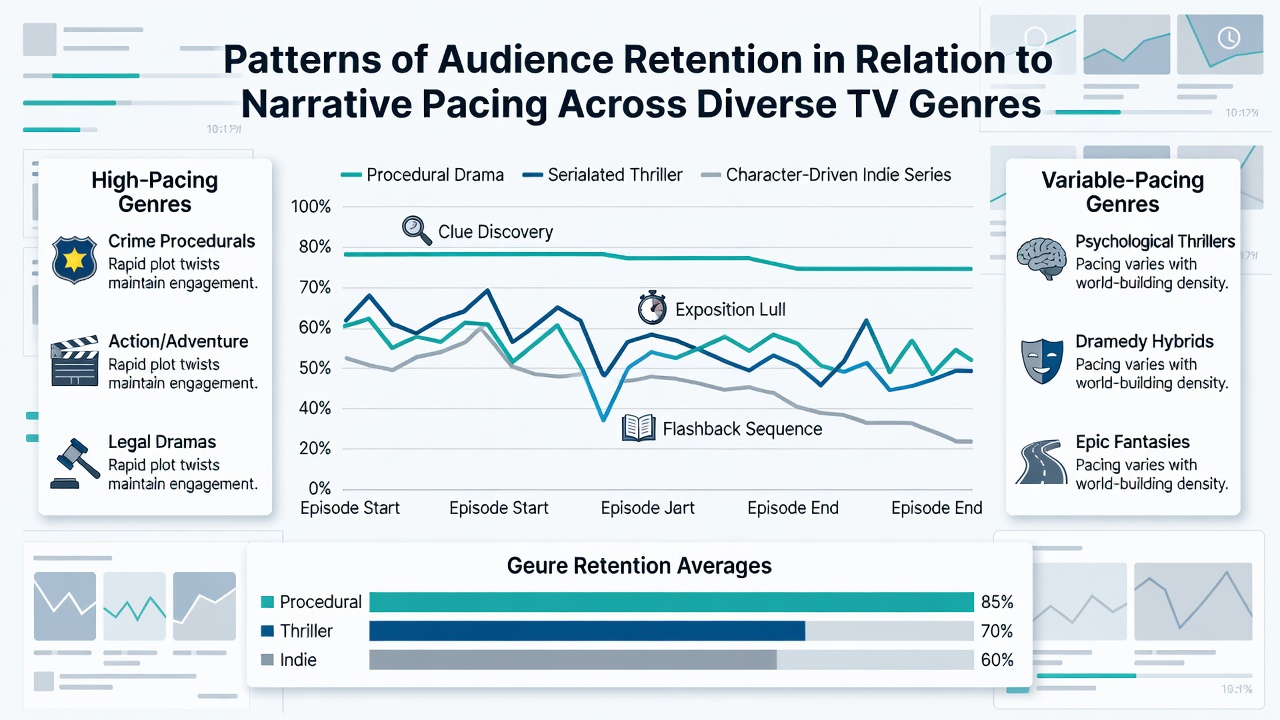
Science fiction entries face unique challenges because world-building requires extended exposition that can stall momentum if not integrated smoothly into the central plot. Retention improves when pacing introduces speculative concepts gradually alongside character-driven conflicts, allowing audiences to absorb rules without disengaging. Studies tracking sci-fi consumption patterns show that seasons employing front-loaded information dumps lose significant portions of initial viewers within the first three episodes, while those distributing lore across the season arc hold audiences through mid-season turning points.
Cross-Genre Influences and Platform Adaptations
Streaming services apply pacing insights from one genre to refine scheduling in others, recognizing that audience expectations shift depending on the primary category yet share common thresholds for narrative density. Research conducted through partnerships with academic centers in Canada has quantified how minute adjustments in scene transitions affect overall season retention, revealing that even minor extensions of transitional sequences can reduce churn in multiple formats simultaneously. Those findings encourage producers to map retention curves early in development, aligning episode rhythms with genre-specific benchmarks derived from aggregated user data. International co-productions further complicate pacing decisions because cultural differences in attention spans require localized editing that preserves core narrative momentum while adapting speed for regional audiences.
Conclusion
Patterns linking narrative pacing to audience retention continue to shape production strategies across television genres as platforms refine content based on accumulating behavioral evidence. Ongoing analyses from regulatory bodies and research institutions worldwide supply the quantitative foundation that guides these adjustments, ensuring pacing decisions rest on observable viewer responses rather than assumptions. The interplay between genre conventions and pacing choices remains a central factor in determining which series achieve sustained engagement through complete seasons and beyond.