Regional Licensing Structures and Niche Genre Distribution in Emerging Economies
Ben Vogel · Jul 2, 2026
Regional Licensing Structures and Niche Genre Distribution in Emerging Economies
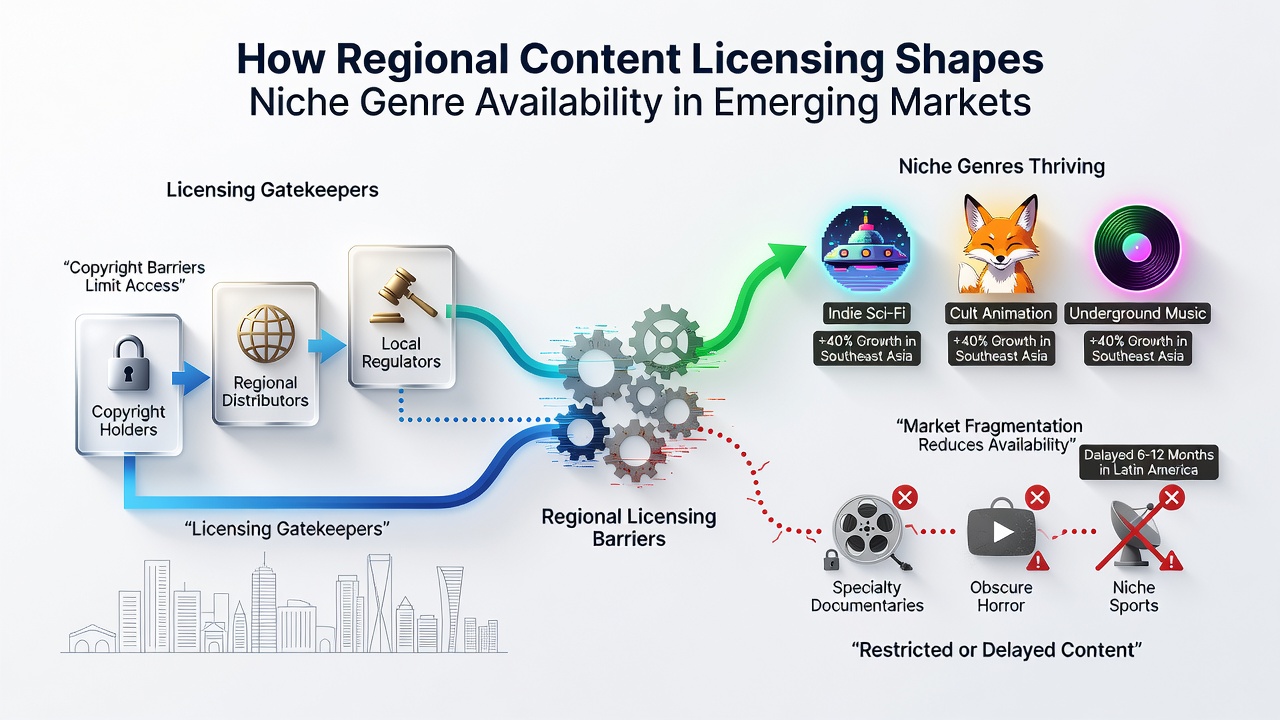
Regional content licensing operates through territorial agreements that grant distribution rights for specific countries or regions, and these contracts directly determine which niche genres reach audiences in emerging markets such as Southeast Asia, sub-Saharan Africa, and Latin America; major rights holders often prioritize broad releases for mainstream titles while restricting specialized categories like experimental documentaries, regional folk horror, or independent science fiction due to perceived market size and revenue projections. Data from industry analyses show that licensing fees and exclusivity clauses create barriers, since distributors in smaller territories must negotiate separate deals that frequently exclude low-volume genres to control costs and minimize risk.
How Territorial Agreements Limit Genre Variety
Content owners divide global rights into geographic packages, and this fragmentation means a niche title available in one market may remain inaccessible elsewhere even when demand exists; for instance, anime subgenres or arthouse thrillers licensed exclusively to European platforms rarely appear in African streaming libraries unless local partners secure additional clearances. Research indicates that these arrangements stem from historical broadcast models where rights were sold territory by territory, and the pattern persists in digital environments because rights holders can maximize returns by segmenting audiences rather than offering uniform global catalogs. Observers note that emerging markets receive fewer options for hybrid genres or cult classics precisely because the negotiation overhead outweighs projected returns, leaving platforms to fill gaps with locally produced content that may not match viewer preferences for imported niche material.
Patterns Observed Across Key Regions in Mid-2026
As of July 2026 licensing activity in markets like Indonesia and Nigeria reveals continued emphasis on blockbuster franchises at the expense of specialized catalogs, with data showing that platforms there allocate under fifteen percent of their libraries to non-mainstream genres compared to higher percentages in established territories; this imbalance arises because rights bundles sold to local operators often bundle popular series while omitting experimental or culturally specific films that require separate clearances. Experts tracking these deals point to cost structures where dubbing, subtitling, and marketing for niche titles add layers of expense that deter investment, and the result is uneven availability that favors action or romance over documentary hybrids or retro animation. But here's the thing, when local regulations encourage content quotas for domestic productions, international niche offerings face additional hurdles since platforms prioritize compliance over expanding imported selections.
Effects on Viewer Access and Platform Strategies
Platforms operating in emerging economies respond to licensing constraints by curating smaller genre selections or relying on user-generated and locally commissioned material, which narrows exposure to global niche trends; studies from academic institutions in Brazil and South Africa have documented how this leads to lower persistence rates among viewers seeking specific subgenres because the available choices skew toward broad-appeal titles. Those who've analyzed streaming data find that when a niche genre like cyberpunk animation lacks licensing clearance, related hybrid categories suffer reduced visibility as well since recommendation systems draw from existing libraries. What's interesting is that some operators experiment with shorter licensing windows or co-production deals to unlock additional genres, yet these solutions remain limited in scale and do not offset the structural effects of territorial restrictions.
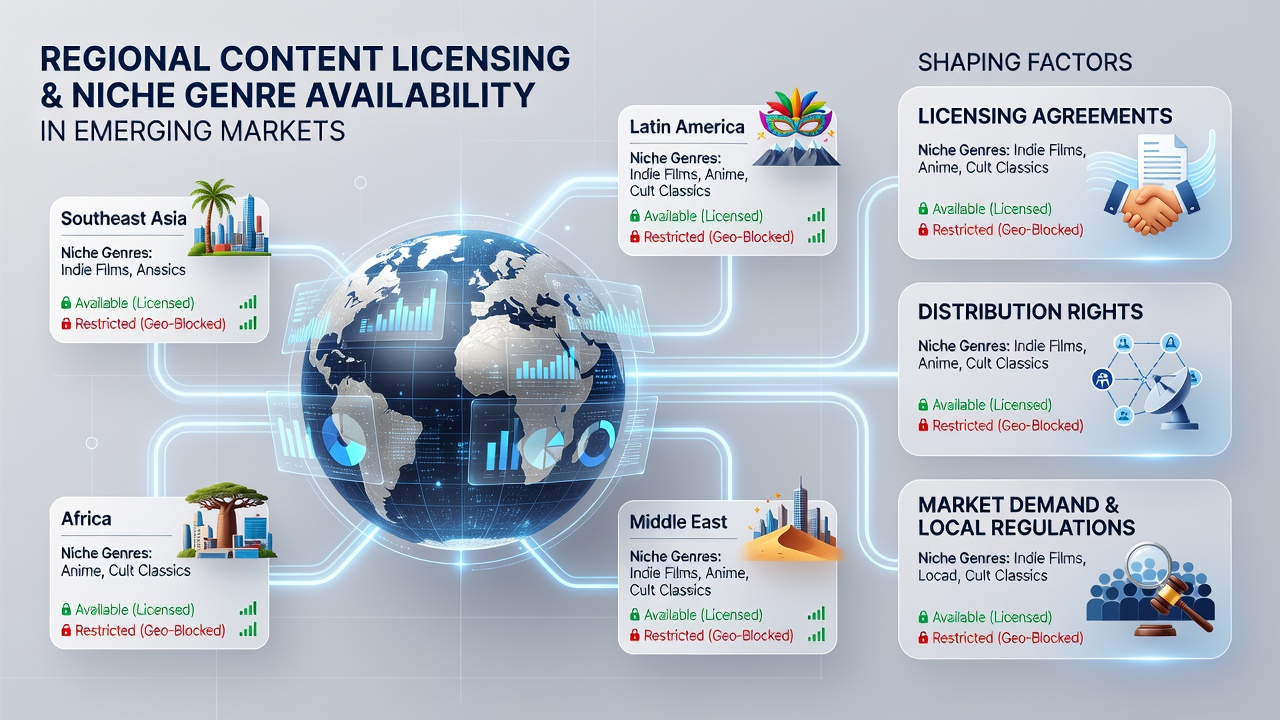
Regulatory frameworks in various emerging economies further shape outcomes because import duties on digital rights and local content mandates influence which licenses distributors pursue; reports from organizations such as the Organisation for Economic Co-operation and Development highlight how policy environments interact with commercial licensing to either facilitate or constrain genre diversity. And while some governments introduce incentives for broader imports, the core economics of rights acquisition continue to favor high-volume categories over specialized ones.
Industry Data and Distribution Trends
Figures from global media analyses reveal that niche genre licensing deals in emerging markets represent a smaller fraction of total transactions, and this proportion has stayed relatively stable despite overall growth in streaming subscriptions; the pattern holds because rights sellers structure packages around proven revenue drivers rather than experimental content that carries higher uncertainty. People who've examined catalog compositions across platforms note that when a major studio withholds rights for a particular subgenre in one territory, competitors rarely fill the void quickly due to parallel licensing negotiations. The reality is that these dynamics create feedback loops where limited availability reduces data on viewer interest, which in turn justifies fewer future deals for similar material.
Conclusion
Regional content licensing continues to define the boundaries of niche genre availability in emerging markets through territorial exclusivity, cost considerations, and regulatory interactions that collectively restrict the range of options presented to local audiences. Evidence from distribution records and platform metrics demonstrates consistent patterns where mainstream titles receive priority clearance while specialized categories face delays or outright exclusion. Those monitoring developments in July 2026 observe that incremental adjustments through co-productions or policy tweaks have yet to produce widespread shifts in genre diversity, leaving the structural influence of licensing agreements as the dominant factor shaping access across these regions.