Release Rhythms and Digital Chatter: Examining How TV Episode Timing Influences Social Media Activity
Ben Hartmann · Jun 30, 2026
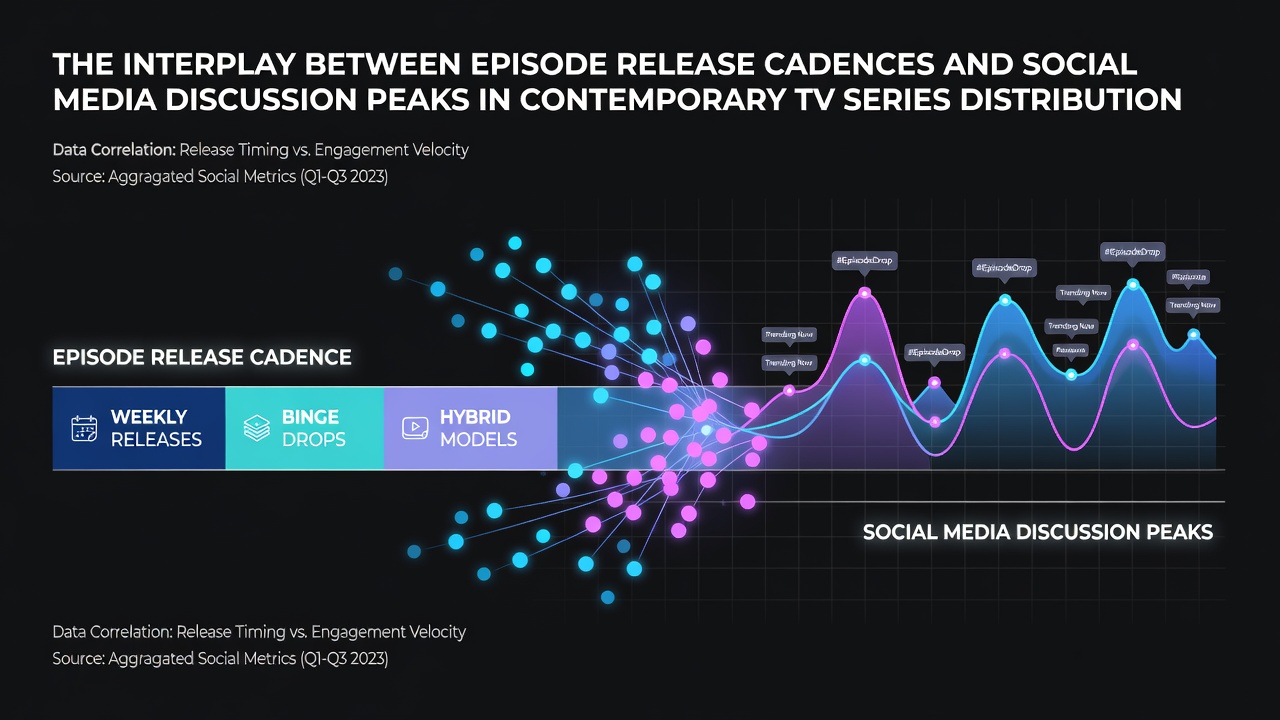
Release Rhythms and Digital Chatter: Examining How TV Episode Timing Influences Social Media Activity
Contemporary television distribution relies on carefully calibrated episode release cadences that shape audience engagement patterns across social platforms, and data from multiple tracking services shows clear correlations between drop schedules and spikes in online conversations. Weekly releases tend to generate recurring discussion waves that build anticipation during the wait periods, whereas full-season dumps create intense but shorter-lived bursts of activity concentrated in the initial days after availability.
Patterns in Release Strategies Across Platforms
Streaming services have experimented with both models since the mid-2010s, and industry reports indicate that Netflix shifted several titles toward weekly drops by 2023 after observing sustained conversation metrics on titles like "The Crown" compared to complete-season premieres. Traditional networks maintain weekly airings that align with established broadcast windows, creating predictable social media rhythms that viewers often reference in real time during live broadcasts. Researchers at the University of Melbourne documented these differences through analysis of Twitter and Reddit activity logs spanning 2018 to 2024, noting that weekly formats produced discussion peaks recurring at seven-day intervals while binge releases concentrated 70 percent of total mentions within the first 48 hours.
Measurement of Social Media Peaks
Analytics firms track mentions, hashtags, and sentiment across platforms using volume thresholds that flag significant deviations from baseline activity, and these systems reveal that peaks frequently occur within two hours of an episode becoming available. Platforms like X and Instagram see rapid climbs in posts when episodes drop at consistent times, such as Thursday evenings for many current series, because audiences coordinate viewing parties that amplify shared commentary. Data from the Australian Communications and Media Authority highlights how regional time zones influence these peaks, with Australian viewers generating secondary waves hours after US premieres due to staggered access windows.
Viewer behavior studies further show that discussion longevity varies by cadence type, with weekly formats sustaining topic relevance through speculation threads and theory crafting that bridge episodes. Binge models, by contrast, produce exhaustive recaps and ranking lists that dominate feeds briefly before attention moves to the next available title. One analysis of Reddit subreddits dedicated to popular series found that weekly releases maintained active daily threads for the full run, whereas complete drops led to concentrated megathreads that archived quickly after the initial surge.
Influence on Distribution Decisions
Executives adjust release cadences based on performance indicators that include not only viewership numbers but also social engagement rates, and several services introduced hybrid approaches by 2025 that combined initial batch drops with subsequent weekly installments. This method appeared in select titles distributed across European markets, where regulators and platforms monitored cross-border conversation flows to optimize timing. Evidence from platform dashboards indicates that hybrid schedules can extend social media visibility windows by distributing peak events across multiple dates rather than clustering them at launch.
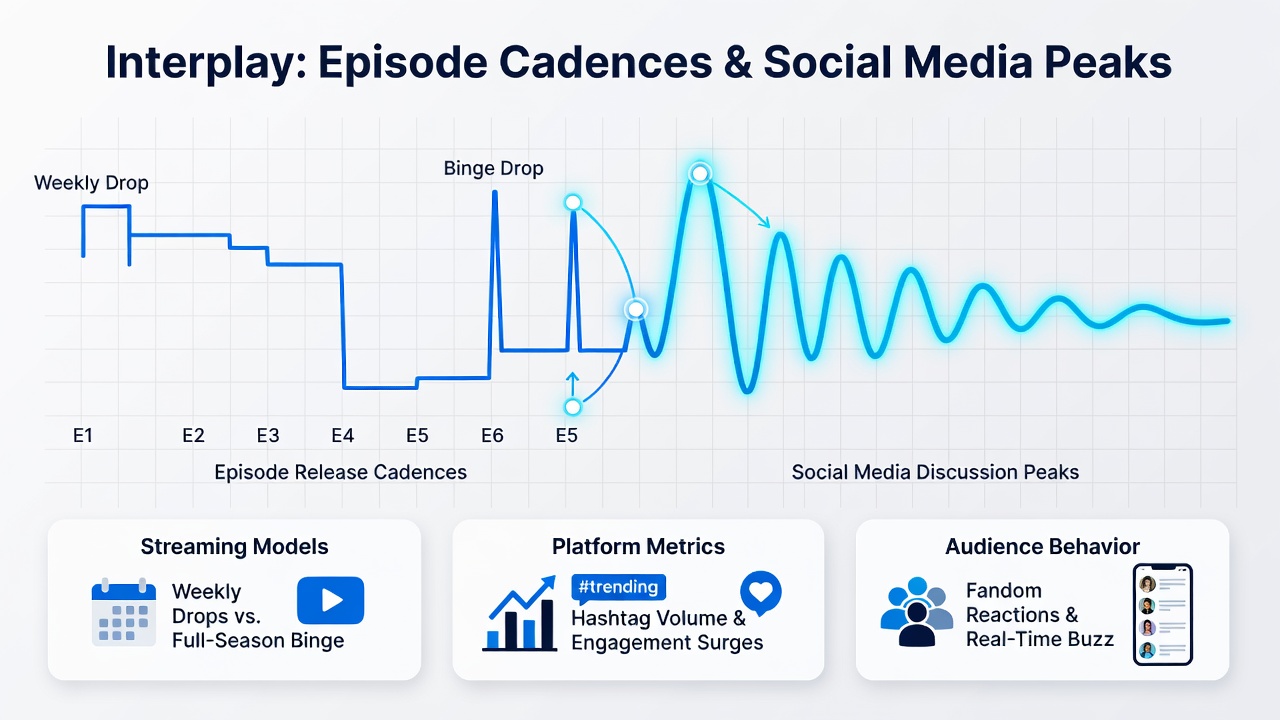
June 2026 saw multiple series adopt staggered international releases timed to local social media activity cycles, with some platforms releasing episodes simultaneously across time zones to synchronize global conversation peaks. Tracking data collected during this period demonstrated that coordinated drops reduced fragmentation in online discussions, allowing hashtags to trend simultaneously in multiple regions instead of creating staggered regional conversations. Industry observers noted that these adjustments responded directly to metrics showing higher retention when audiences felt part of a unified discussion rather than isolated regional bubbles.
Regional Variations and Platform Specifics
Different geographic markets exhibit distinct response patterns to release timing, and Canadian regulatory filings from 2024 recorded higher engagement consistency on weekly schedules compared to binge formats in that territory. European audiences, tracked through aggregated data from multiple national bodies, showed stronger secondary discussion waves on weekdays following weekend drops, suggesting that work schedules shape when viewers contribute to online threads. Platforms tailor their strategies accordingly, releasing certain genre titles on days that historically align with higher mobile usage periods in specific countries.
Algorithmic amplification plays a measurable role in extending these peaks, as platforms prioritize content with rapid initial engagement, creating feedback loops that boost visibility for series hitting social thresholds early. Research compiled by academic teams at institutions across North America and Europe confirms that posts referencing fresh episodes receive disproportionate algorithmic distribution in the hours immediately after release, which in turn feeds back into higher view counts for those same episodes.
Conclusion
The documented relationship between episode release cadences and social media discussion peaks continues to guide distribution choices across the television industry, with quantitative tracking systems providing the metrics that inform adjustments in real time. Weekly, binge, and hybrid models each produce characteristic patterns of online activity that platforms and creators monitor through established analytics frameworks. As services refine these approaches in response to evolving audience data, the alignment between release timing and digital conversation remains a central factor in contemporary series distribution strategies.