Subtitle Timing Precision and Viewer Immersion in Multilingual Streaming Libraries
Felix Braun · May 26, 2026
Subtitle Timing Precision and Viewer Immersion in Multilingual Streaming Libraries
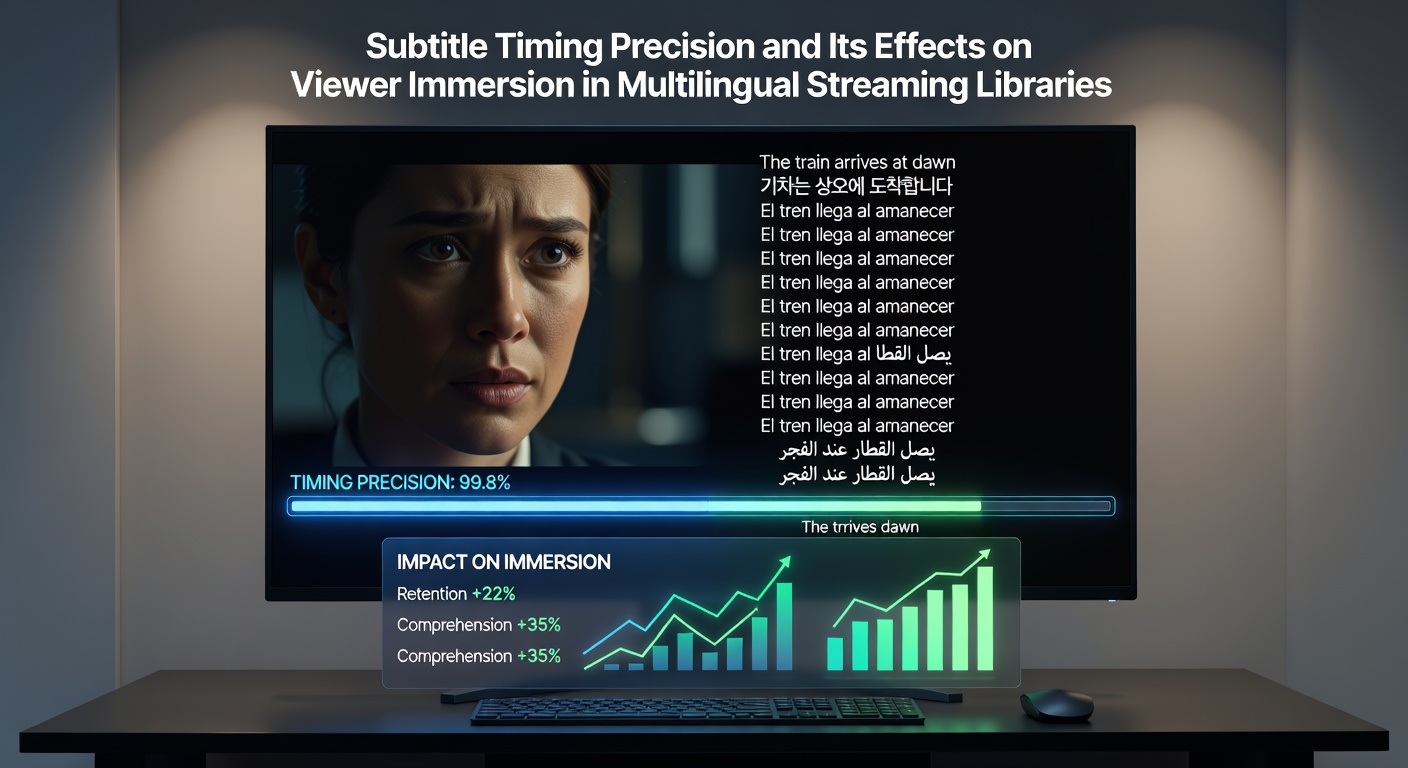
Subtitle timing precision determines how closely text aligns with spoken dialogue in multilingual streaming libraries, where even small deviations can alter how audiences process narrative flow and emotional cues across different languages and cultural contexts. Researchers at various institutions have measured these alignments down to milliseconds, finding that delays or advances in subtitle appearance directly influence cognitive processing speeds and retention rates for viewers consuming content in secondary languages.
Mechanisms Behind Subtitle Synchronization Standards
Streaming platforms rely on timed text formats such as TTML and WebVTT to position subtitle events against video timelines, and these formats encode start and end points that technicians adjust during post-production localization workflows. Data from industry reports indicate that professional subtitlers typically calibrate entries within 100 to 200 milliseconds of audio onsets to maintain readability while preserving lip-sync illusions for viewers who follow both tracks simultaneously. When platforms expand libraries with titles from dozens of source languages, automated tools assist human editors in generating initial timing tracks, yet final refinements still require manual review to account for speech rate variations that differ between fast-paced action sequences and slower dramatic exchanges.
Measured Impacts on Viewer Engagement Metrics
Studies conducted across European streaming services have tracked eye-movement patterns and found that subtitle entries offset by more than 300 milliseconds increase fixation durations on text elements, which in turn reduces attention available for visual details in the frame. Observers note that such offsets accumulate viewer fatigue over extended viewing sessions, particularly in libraries offering series with dense dialogue exchanges. According to accessibility guidelines published by the US Access Board, precise caption timing also supports users who rely on combined audio and text cues for comprehension, and deviations beyond established thresholds correlate with lower completion rates in controlled platform tests. Platforms that tightened their timing tolerances to under 150 milliseconds reported measurable upticks in session lengths for non-native language viewers during 2025 data collection periods.
Technical Challenges Across Language Pairs and Content Types
Multilingual libraries introduce additional variables because languages vary in average syllable duration and syntactic structure, requiring subtitlers to compress or expand text while respecting frame-accurate timing constraints. For instance, German compound words often demand longer display windows than equivalent English phrases, forcing editors to shift subsequent lines earlier to avoid overlap with following speech. Animation and fast-cut genres present further hurdles since rapid visual changes leave less margin for timing errors before immersion breaks down. In May 2026 several major platforms introduced updated encoding pipelines that incorporate real-time speech-to-text feedback loops, allowing timing adjustments to propagate across subtitle tracks for multiple target languages within a single workflow pass.
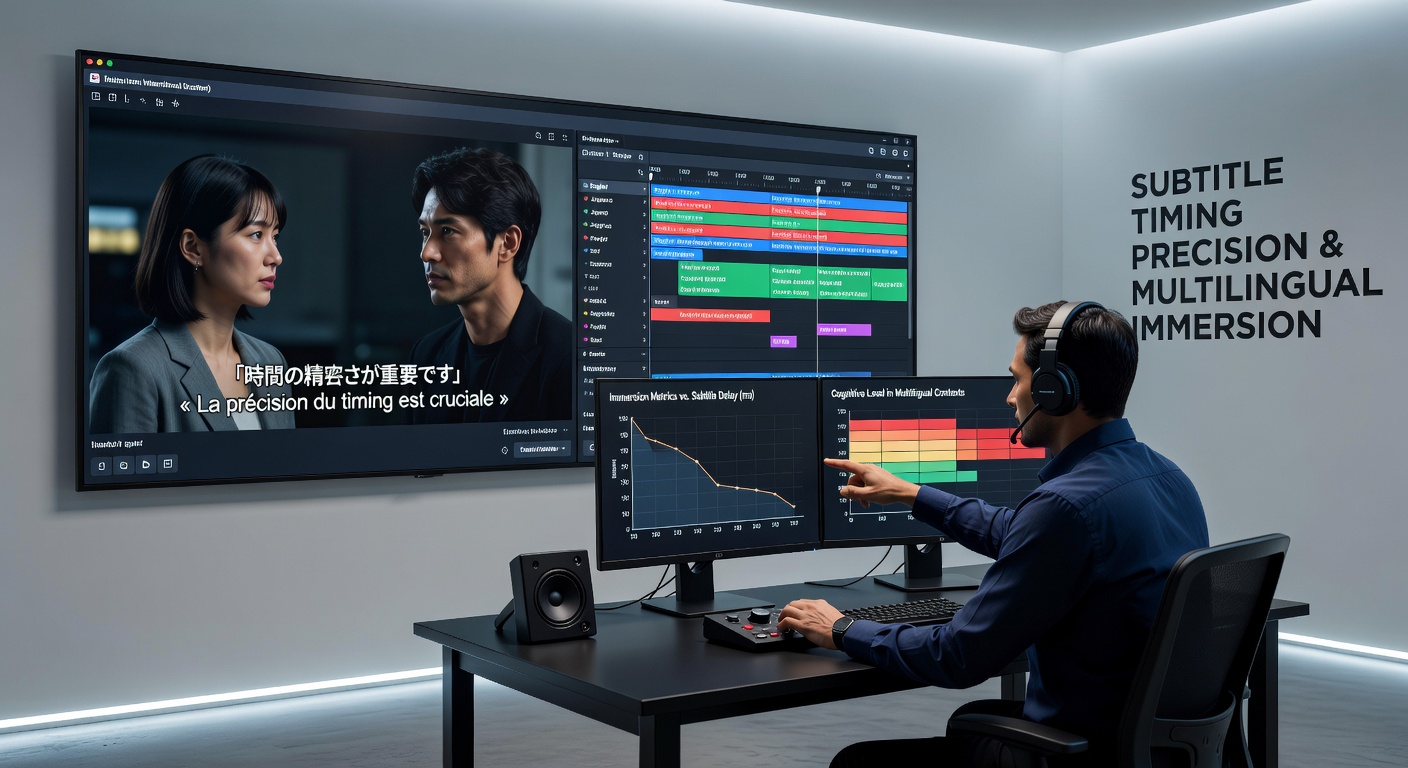
Those who've analyzed large-scale viewing logs observe that consistent timing precision across an entire season reduces drop-off points at episode transitions, whereas inconsistent tracks within the same title produce noticeable spikes in pause events as audiences attempt to reconcile mismatched text and audio.
Research Findings on Cognitive Load and Emotional Connection
Academic investigations from Canadian media studies programs have quantified how subtitle timing precision modulates emotional engagement by measuring heart-rate variability during key scenes, revealing that well-synchronized text allows viewers to allocate more resources to character expressions and soundtrack nuances rather than decoding delays. When timing drifts exceed industry norms, secondary effects emerge in the form of reduced empathy scores for dubbed or subtitled protagonists, because the brain expends extra effort bridging the temporal gap. Figures from longitudinal platform analytics show that libraries maintaining sub-100-millisecond average deviations across their multilingual catalogs sustain higher repeat-view percentages, especially among audiences who switch between original audio and translated tracks mid-series.
Future Directions in Timing Automation and Quality Assurance
Emerging machine-learning models now predict optimal entry points by analyzing prosodic features in source audio tracks, and these models have demonstrated reductions in manual correction time while preserving the millisecond-level accuracy demanded by quality-control protocols. Industry organizations such as the Society of Motion Picture and Television Engineers continue to refine recommended practices that integrate both human expertise and algorithmic suggestions, creating hybrid pipelines capable of handling expanding global catalogs. As multilingual libraries grow to include regional dialects and minority languages, maintaining uniform timing standards across all assets remains a central operational priority for platforms seeking consistent viewer experiences worldwide.
Conclusion
Subtitle timing precision operates as a foundational element within multilingual streaming libraries, where millisecond-level decisions accumulate into measurable differences in how audiences sustain attention and process narrative information across linguistic boundaries. Continued refinement of both automated tools and human oversight processes ensures that expanding content catalogs can deliver synchronized text tracks without compromising the immersive qualities that draw viewers to international productions. Data collected through 2026 indicates that platforms investing in tighter timing tolerances achieve stronger engagement metrics across diverse language cohorts, underscoring the technical and creative value of accuracy in this domain.