Synchronized Global Premieres Reshape Audience Reach Across Streaming Ecosystems
Felix Braun · Aug 18, 2026
Synchronized Global Premieres Reshape Audience Reach Across Streaming Ecosystems
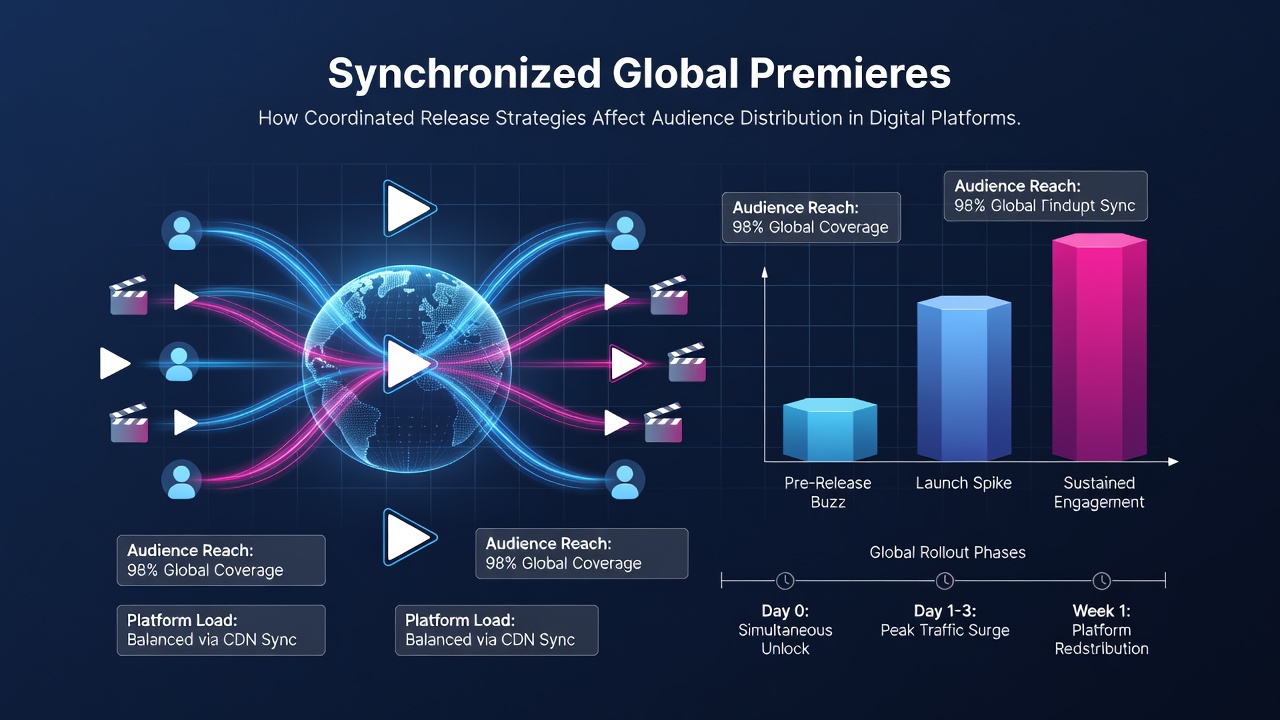
Coordinated release strategies have become a standard practice among major streaming services since the mid-2010s, and they continue to influence how viewers access content in different regions. Platforms release titles on the same date across multiple countries rather than staggering launches by territory, which alters traditional patterns of audience distribution and content consumption. Data from industry tracking services shows that simultaneous premieres often produce concentrated spikes in global viewership during the first 48 hours after launch.
Mechanics Behind Coordinated Releases
Streaming companies coordinate with production studios and distributors to align marketing campaigns, subtitle and dubbing preparations, and server capacity across time zones. This approach requires extensive pre-release planning that includes localization teams working months in advance to prepare assets for dozens of markets simultaneously. When a title drops worldwide on one date, regional catalogs update at the same moment, which removes the window that previously allowed some territories to receive content weeks or months later.
Impact on Regional Viewership Patterns
Studies conducted by academic researchers at institutions in North America and Europe indicate that synchronized premieres tend to flatten the distribution curve of first-week audiences. Instead of sequential peaks as releases roll out territory by territory, platforms record a single large surge followed by steadier but lower daily engagement. Figures from platform analytics shared in industry briefings reveal that titles released in this manner capture between 60 and 75 percent of their first-month total views within the opening weekend across all regions combined.
Observers note that audiences in smaller markets sometimes gain earlier access than they did under staggered models, while viewers in major territories no longer dominate initial discussion volume. This shift redistributes attention and social media activity more evenly across time zones during the critical launch period.
Examples from Recent Platform Strategies
Take one major service that scheduled multiple original series for simultaneous August 2026 launches across its full international footprint. Those titles recorded comparable per-capita viewership numbers in secondary markets such as Australia, Canada, and several European Union member states compared with primary English-language territories. Platform reports presented at trade conferences documented reduced variance between high- and low-performing regions when coordination replaced phased rollouts.
Another case involved a non-English language production that debuted worldwide on the same day in both subtitled and dubbed versions. Metrics collected by third-party measurement firms showed sustained daily viewership extending beyond the first week, which researchers attribute to the absence of staggered leaks that previously fragmented audience attention.

Data Trends and Measurement Approaches
Research published through the European Audiovisual Observatory tracks how simultaneous releases affect cross-border content flow within the European single market. Their datasets compare pre- and post-coordination periods and show tighter clustering of peak viewing times across member states. In parallel, reports from Australia's communications regulator document similar compression of audience curves when local catalogs align with global drop dates.
Platforms themselves rely on internal telemetry to measure completion rates and geographic spread. These internal figures, referenced in earnings calls and regulatory filings, consistently indicate that coordinated strategies reduce the share of total views occurring in any single dominant region while increasing aggregate international participation during the premiere window.
Operational and Technical Considerations
Delivering synchronized premieres demands precise orchestration of content delivery networks and regional licensing agreements. Legal teams must clear rights for every territory at once, while engineering groups scale infrastructure to handle simultaneous global demand. Failures in any single component can create uneven access that undermines the intended distribution effect.
Localization quality also plays a measurable role. When subtitles and dubs reach consistent standards across languages, retention metrics remain more uniform between markets. Industry conferences in 2025 and 2026 featured sessions dedicated to these operational workflows and their measurable outcomes on audience geography.
Conclusion
Coordinated global premieres have reconfigured how audiences encounter new titles on digital platforms by replacing sequential territory rollouts with unified launch dates. Available data from regulatory bodies and research institutions demonstrates measurable shifts in viewership concentration, regional participation rates, and the timing of peak engagement. These patterns continue to evolve as platforms refine their release calendars and measurement capabilities through 2026 and beyond.