Syncing Sounds: The Technical Precision Behind Audio Dubs in Multilingual Streaming Catalogs
Felix Braun · Jul 16, 2026
Syncing Sounds: The Technical Precision Behind Audio Dubs in Multilingual Streaming Catalogs
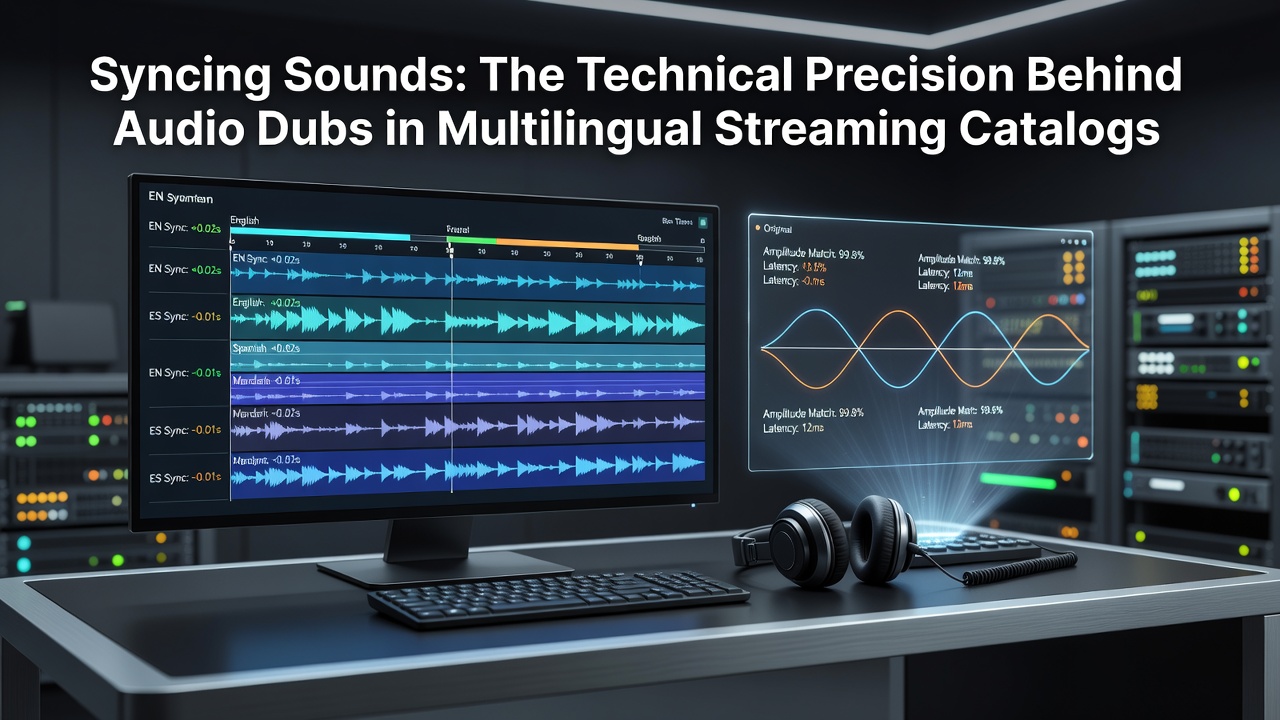
Audio dubbing for multilingual streaming catalogs demands exact synchronization between spoken dialogue and on-screen lip movements, and this process begins with source material analysis that identifies phonetic patterns across languages. Engineers extract original audio waveforms, then align replacement tracks using timecode markers that maintain frame-accurate placement within video files.
Core Synchronization Methods
Technicians rely on automated tools that detect mouth shapes and map them to target-language phonemes, while human operators refine those matches through iterative playback sessions. Research from the European Audiovisual Observatory shows that precise timing reduces viewer distraction by measurable margins in cross-language releases, and the same data highlights how even millisecond offsets disrupt narrative flow in action sequences or rapid dialogue exchanges.
Automated dialogue replacement sessions capture new performances in controlled environments where actors view original footage on monitors, and they deliver lines timed to match visible articulations. These recordings undergo pitch correction and speed adjustment before final mixing, and the resulting tracks integrate with background effects and music stems that remain untouched from the source production.
Advances in July 2026 Implementations
By July 2026 several major platforms rolled out updated dubbing pipelines that incorporate real-time machine learning models trained on thousands of hours of paired language data, and these systems generate preliminary alignments that human supervisors review for cultural nuance. Observers note that the shift allows catalogs to expand faster without proportional increases in post-production budgets, while quality benchmarks remain consistent across regions.
Quality Control and Standards
Industry groups such as the Society of Motion Picture and Television Engineers publish guidelines that define acceptable sync tolerances and frequency response ranges for dubbed tracks, and streaming services adopt these parameters to ensure compatibility across devices. Compliance testing involves automated lip-sync detection software followed by blind listening panels that score clarity and emotional delivery.
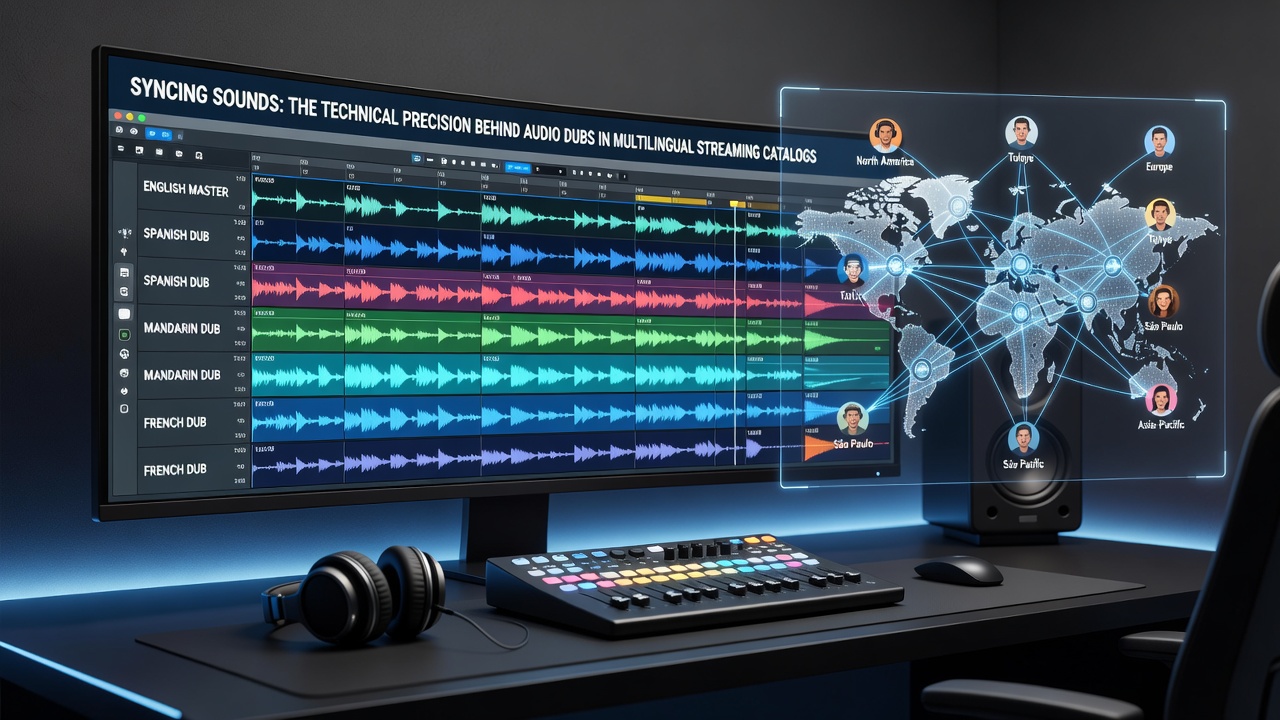
Metadata embedded within each dubbed file records every adjustment made during production, and this information supports future revisions when new translation approaches emerge. Streaming repositories use the same metadata to route appropriate language versions to users based on account preferences and regional availability.
Challenges Across Language Pairs
Language pairs with differing syllable structures create unique hurdles, and technicians address them by stretching or compressing segments of dialogue while preserving natural cadence. Mandarin-to-Spanish adaptations, for instance, often require additional pauses that fit visual timing, and engineers insert subtle breaths or filler sounds to maintain rhythmic consistency.
Case studies from global streaming services reveal that titles with dense conversational scenes benefit most from hybrid workflows combining AI-generated drafts with targeted human edits, and those same studies document reduced turnaround times when teams follow standardized cue sheets that list every line and its corresponding timecode.
Conclusion
Technical precision in audio dubbing rests on layered processes that blend automated alignment tools, skilled performance capture, and rigorous verification protocols, and these elements together enable seamless multilingual access within expansive streaming catalogs. Continued refinement of synchronization algorithms and adherence to established engineering standards support ongoing expansion of accessible content worldwide.