The Role of Viewer Analytics in Determining Content Renewals for Subscription Video Services
Ben Vogel · Aug 20, 2026
The Role of Viewer Analytics in Determining Content Renewals for Subscription Video Services
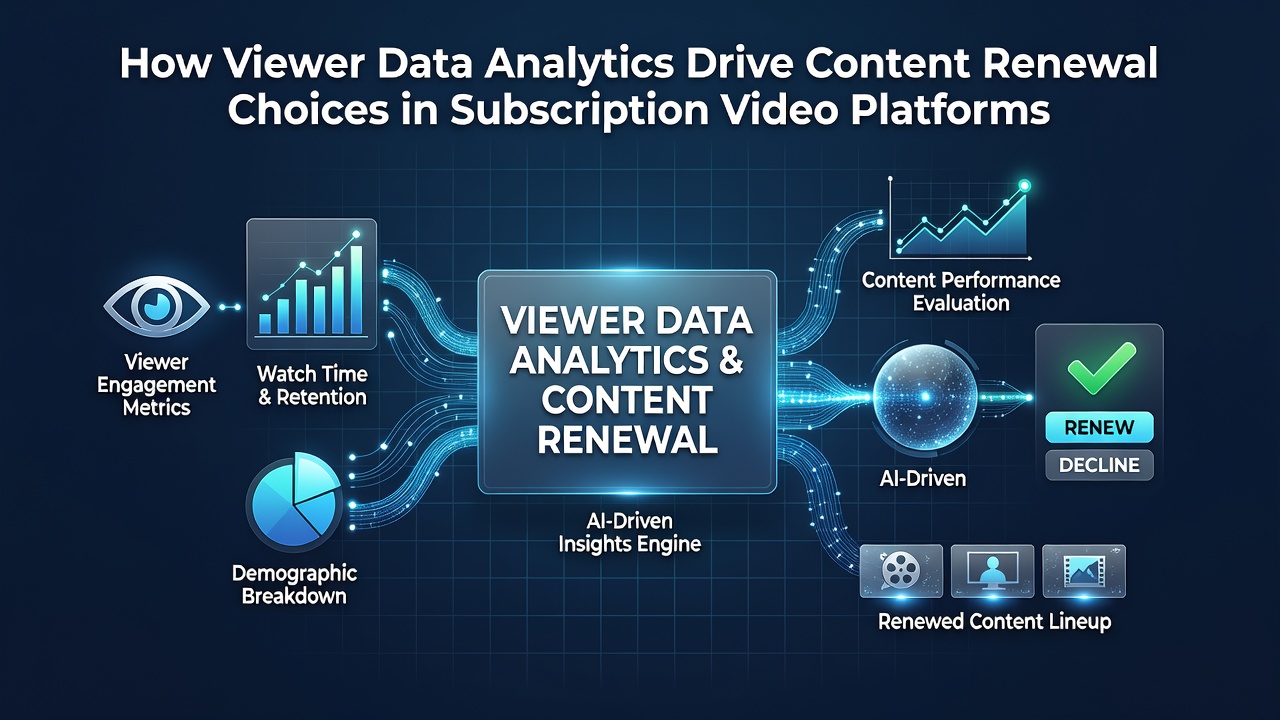
Subscription video platforms rely on extensive viewer data analytics to guide decisions about which series and films receive renewals, and these systems process billions of data points each month while executives review patterns in completion rates, session durations, and audience retention across different regions. Analysts track metrics such as average view time per episode, drop-off points within individual titles, and repeat viewing frequency to build predictive models that forecast long-term subscriber value for specific content, and this approach allows platforms to allocate production budgets more precisely based on demonstrated demand rather than initial launch performance alone.
Core Metrics That Shape Renewal Evaluations
Platforms measure completion rates as a primary indicator, since titles that retain over 70 percent of viewers through final episodes tend to show stronger renewal prospects, while lower figures often trigger deeper reviews of marketing spend and scheduling factors. Data teams also examine cross-device engagement patterns, noting how mobile versus smart TV consumption influences overall persistence, and they combine these insights with demographic breakdowns to identify which audience segments drive the most consistent returns. In August 2026, several major services reported integrating real-time churn prediction tools that flag accounts at risk of cancellation when specific genre preferences go unfulfilled for extended periods, allowing preemptive content adjustments before renewal windows close.
Decision Workflows Inside Platform Organizations
Renewal committees meet monthly to review aggregated dashboards that highlight titles meeting internal thresholds for continued investment, and these meetings incorporate inputs from content acquisition, marketing, and data science teams who present findings on projected subscriber growth versus licensing costs. Algorithms surface comparative benchmarks, such as how a new drama performs against similar releases from the prior year, while human reviewers adjust for external variables like competing platform launches or seasonal viewing shifts. Observers note that platforms in North America and Europe have standardized many of these evaluation criteria through shared industry reports, yet regional variations persist due to differing regulatory environments and content preferences.
Regional Variations in Data Application
European services often weigh cultural impact metrics alongside raw viewership numbers, drawing from studies conducted by organizations such as the CRTC that track how multilingual subtitle usage affects long-term retention in diverse markets. Australian platforms apply similar frameworks informed by ACMA research on local content quotas, which requires balancing global analytics trends with domestic production mandates. These layered approaches demonstrate how viewer data analytics adapt to local conditions while maintaining core quantitative foundations across borders.
Integration of Predictive Modeling Techniques
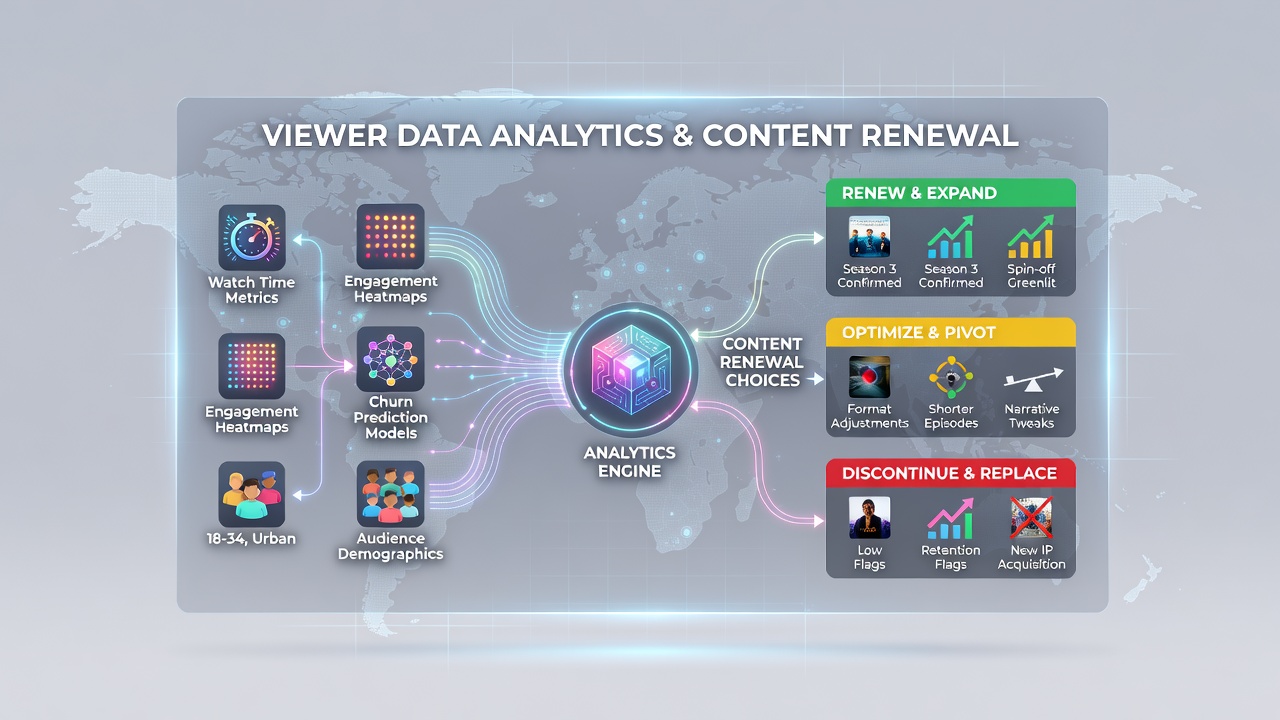
Advanced platforms deploy machine learning models that simulate renewal outcomes under various budget scenarios, and these simulations process historical data spanning multiple seasons to estimate future performance with increasing accuracy. One study revealed that services incorporating sentiment analysis from social media alongside traditional viewing logs achieved higher precision in identifying borderline renewal candidates, while another case showed analysts adjusting thresholds after observing unexpected spikes in niche genre interest during global events. Data pipelines continuously refine these models through feedback loops that compare predicted versus actual subscriber behavior following each renewal announcement.
Challenges in Interpreting Analytics Outputs
Although data volumes continue to grow, platforms face difficulties distinguishing correlation from causation when multiple variables shift simultaneously, such as simultaneous changes in recommendation algorithms and content promotion strategies. Privacy regulations in multiple jurisdictions further constrain the granularity of individual-level tracking, prompting teams to develop aggregated cohort analyses that preserve utility without violating compliance standards. Those who've studied these systems observe that smaller platforms sometimes adopt simplified versions of these analytics frameworks due to resource limitations, yet the underlying principles remain consistent across organizations of varying scale.
Conclusion
Viewer data analytics have become central to renewal processes at subscription video platforms, providing structured evidence that supports budget allocation and content strategy across global markets. The combination of completion metrics, predictive modeling, and regional adaptation continues to evolve as new data sources and regulatory frameworks emerge, and services maintain ongoing investment in these capabilities to sustain competitive positioning in an expanding streaming landscape.