Tracing Viewer Abandonment Linked to Adaptive Quality Adjustments in International Digital Media Archives at High-Traffic Intervals
Logan Braun · Jun 23, 2026
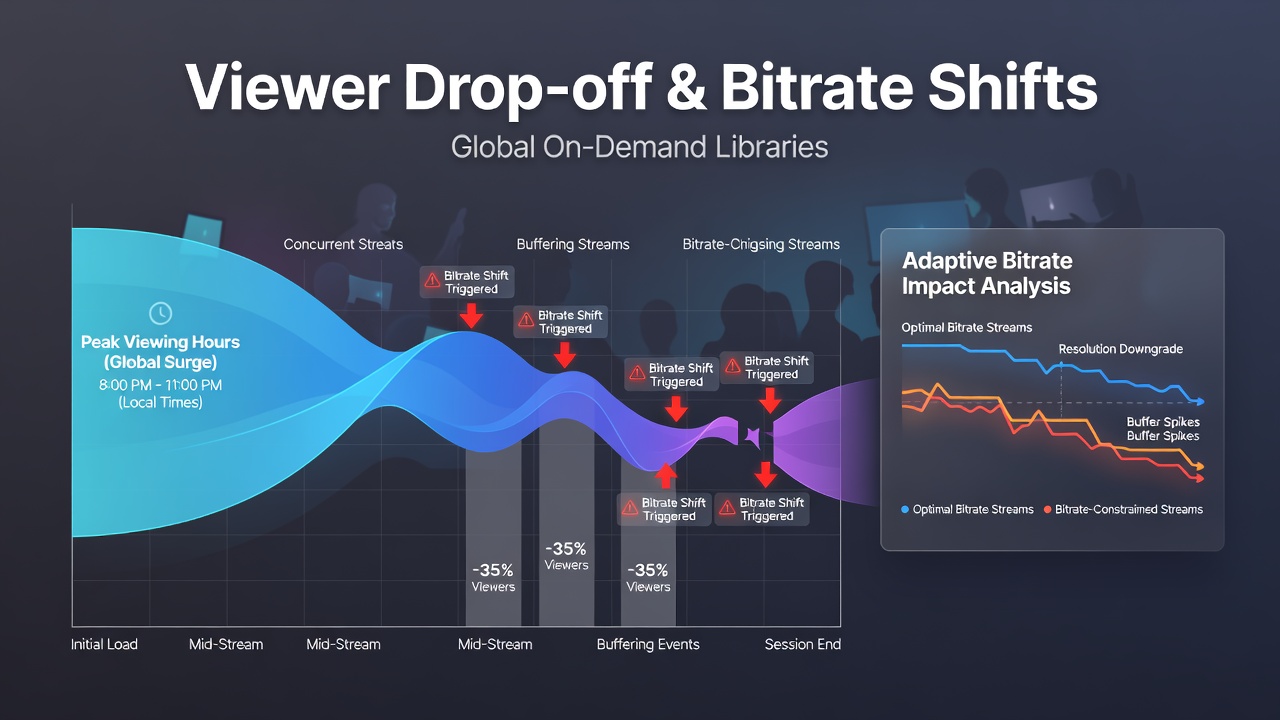
Tracing Viewer Abandonment Linked to Adaptive Quality Adjustments in International Digital Media Archives at High-Traffic Intervals
Streaming services monitor viewer behavior through detailed logs that capture session duration, device type, and network conditions while adaptive bitrate algorithms adjust video quality in real time based on available bandwidth. Researchers collect these datasets from multiple regions to identify correlations between sudden quality reductions and abrupt session endings, particularly when user volumes spike between 7 PM and 11 PM local time across different time zones.
Data Collection Methods Across Global Platforms
Analysts aggregate anonymized playback records from servers located in North America, Europe, Asia, and Australia where systems track every bitrate switch from 1080p down to 480p or lower during congestion events. In June 2026 a collaborative report issued by the International Telecommunication Union highlighted that quality drops exceeding two resolution levels within a 30-second window coincided with measurable increases in termination rates across sampled libraries. Observers note that these patterns emerge consistently when concurrent streams exceed 65 percent of regional capacity, prompting algorithms to throttle delivery to maintain stability for the remaining audience.
Peak Hour Congestion and Retention Curves
Traffic analysis reveals that North American libraries experience the sharpest bitrate transitions between 8 PM and 10 PM Eastern Time while European services register similar activity from 7 PM to 9 PM Central European Time. Data shows termination spikes of 12 to 18 percent occur within 90 seconds of a forced downgrade to sub-720p streams when bandwidth falls below 5 Mbps for more than 45 seconds. Australian and Canadian repositories display comparable trends shifted by local evening schedules, with researchers documenting that viewers on mobile networks abandon sessions 1.4 times more frequently than those on fixed broadband during the same events.
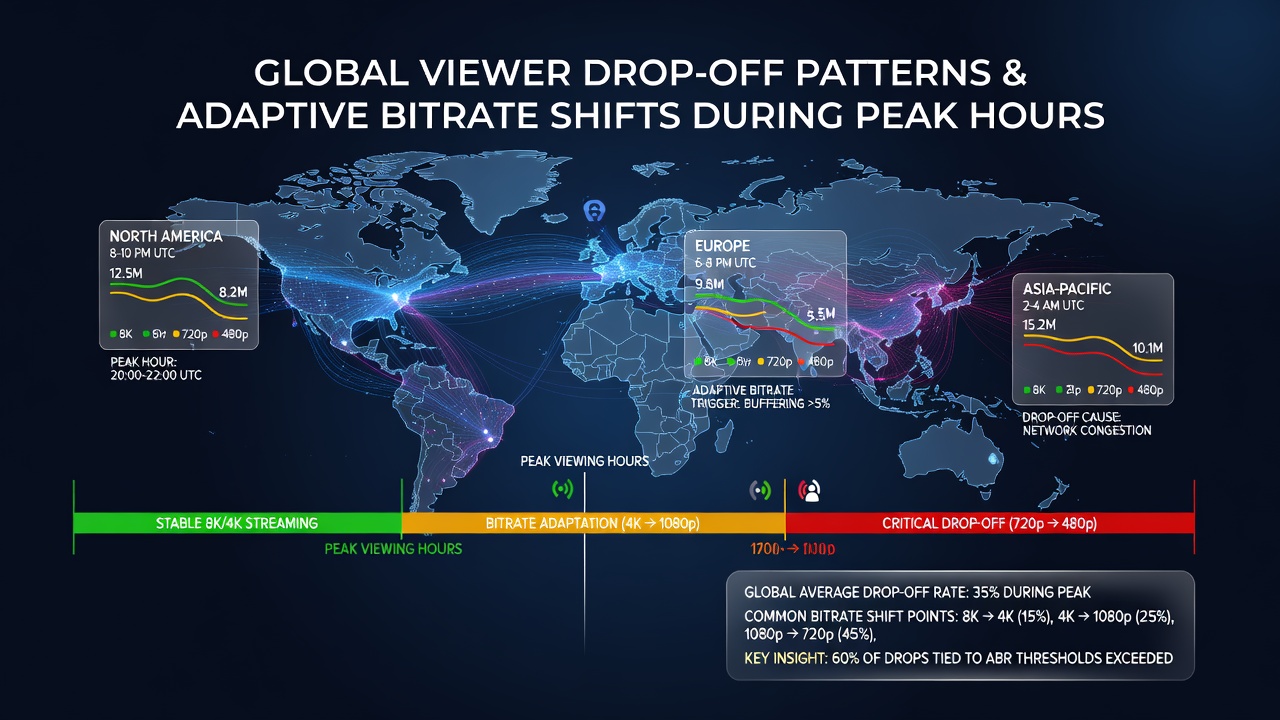
Take one research team that examined logs from a major Asian platform where evening peaks produced repeated switches between 4K and HD tiers. Their findings indicated that sessions ending within the first minute after such adjustments accounted for nearly one-quarter of all drop-offs recorded during those windows. The same team observed that gradual quality scaling over 90 seconds produced noticeably lower termination figures, suggesting the speed of adjustment plays a measurable role in retention outcomes.
Regional Variations in Viewer Response
European studies conducted through partnerships with national broadcasting authorities demonstrate that viewers in densely populated urban zones exhibit higher sensitivity to quality changes than rural subscribers, with the former group terminating 9 percent more often after a single bitrate reduction. Figures released by the Australian Communications and Media Authority in early 2026 showed parallel results during national sporting events when simultaneous streaming demand overloaded local caches. Those datasets further revealed that viewers accessing content through smart televisions maintained sessions longer than mobile users under identical network stress, a difference attributed to device buffering capabilities and screen size expectations.
Observers tracking libraries serving multilingual audiences found that subtitle-enabled streams sometimes buffered additional data during transitions, extending the interval before quality adjustments triggered exits. This pattern appeared most clearly in repositories where dubbed audio tracks competed with original-language options for bandwidth priority.
Technical Factors Influencing Drop-Off Timing
Adaptive systems rely on client-side metrics such as buffer occupancy and round-trip latency to decide when to lower resolution or frame rate. When multiple users in the same geographic cluster initiate streams simultaneously, the resulting contention forces quicker downward adjustments. Research indicates that platforms employing predictive prefetching of lower-bitrate segments reduce the frequency of visible quality changes, thereby limiting the abrupt shifts that correlate with exits. One industry consortium report compiled from North American and European operators confirmed that predictive models lowered peak-hour termination rates by an average of 7 percentage points compared with purely reactive algorithms.
Conclusion
Comprehensive examination of global on-demand libraries demonstrates that viewer abandonment patterns align closely with the timing and magnitude of adaptive bitrate shifts, especially when those adjustments occur rapidly during periods of elevated concurrent demand. Continued aggregation of regional datasets enables platforms to refine algorithms that balance delivery stability against user expectations for consistent visual quality. Future monitoring efforts will likely incorporate additional device and network variables to further isolate the precise thresholds at which audiences disengage.